Date: March 10, 2026
Introduction
As of March 10, 2026, Apple Inc. (NASDAQ: AAPL) stands not just as a technology company, but as a global economic pillar with a market capitalization hovering near $3.8 trillion. For decades, the narrative surrounding Apple was defined by its hardware prowess—the Macintosh, the iPod, and the ubiquitous iPhone. Today, however, the company is in the midst of its most significant metamorphosis since the 2007 debut of the smartphone.
Apple is currently at the center of an "AI-driven super-cycle," fueled by the maturation of Apple Intelligence and a strategic pivot toward spatial computing via the Vision Pro lineup. With a massive installed base of over 2.5 billion active devices, Apple remains the gold standard for ecosystem "stickiness." Yet, the company faces unprecedented headwinds from global regulators and a shifting leadership bench. This article explores the intricate machinery of the world’s most valuable brand and its trajectory in an increasingly autonomous and regulated world.
Historical Background
Apple’s journey is one of the most storied in corporate history. Founded in 1976 by Steve Jobs, Steve Wozniak, and Ronald Wayne in a California garage, the company’s early years were defined by the Apple II and the revolutionary Macintosh (1984). After a period of decline and the ousting of Jobs in 1985, the company teetered on the brink of bankruptcy in the late 1990s.
The "Second Coming of Jobs" in 1997 initiated a golden age of industrial design and consumer electronics. The iMac G3, the iPod (2001), and the iPhone (2007) fundamentally changed how humans interact with technology. Following Jobs’ passing in 2011, Tim Cook took the helm, shifting the company’s focus toward operational excellence, global supply chain optimization, and the expansion of the Services segment. Under Cook, Apple transitioned from a high-growth hardware disruptor into a high-margin services juggernaut and a dividend-paying blue chip.
Business Model
Apple’s business model is built on a "walled garden" philosophy, where hardware, software, and services are tightly integrated to create a seamless user experience.
- iPhone: Remains the primary revenue driver, accounting for roughly 50-55% of total sales. The iPhone acts as the "gateway" to the rest of the ecosystem.
- Services: The fastest-growing and highest-margin segment (over 75% gross margin). This includes the App Store, iCloud, Apple Music, Apple Pay, and the burgeoning Apple Intelligence subscription tiers.
- Wearables, Home, and Accessories: Includes the Apple Watch, AirPods, and the Vision Pro. This segment has become larger than some Fortune 500 companies on its own.
- Mac and iPad: While more mature markets, these remain critical for professionals and students, now powered by Apple’s industry-leading proprietary silicon (M-series chips).
The core of the model is lock-in: once a user is invested in the iCloud ecosystem and owns multiple devices, the switching costs (both financial and cognitive) become prohibitively high.
Stock Performance Overview
Over the past decade, AAPL has been a cornerstone of wealth creation for institutional and retail investors alike.
- 10-Year Performance: Apple has delivered a staggering total return, significantly outperforming the S&P 500. A decade ago, the stock split-adjusted price was a fraction of today’s levels, reflecting the massive scale-up of the Services business and aggressive share buybacks.
- 5-Year Performance: Despite pandemic-induced supply chain disruptions and geopolitical tensions, the stock surged as the "work from home" era boosted Mac and iPad sales, followed by the AI-led rally of 2024-2025.
- 1-Year Performance: Over the last 12 months, the stock has risen approximately 35%, recently trading between $257 and $260. This rally was largely driven by the successful launch of the iPhone 17 series and the rollout of Apple Intelligence in European and Asian markets.
Financial Performance
Apple’s financial health remains robust, characterized by record-breaking revenue and disciplined capital allocation.
- Fiscal 2025 Recap: Apple reported a record $416.2 billion in annual revenue with a net income of $112 billion.
- Latest Earnings (Q1 2026): For the holiday quarter ended December 2025, Apple reported revenue of $143.8 billion, a 16% year-over-year increase.
- Margins: Gross margins have remained resilient in the 45-46% range, bolstered by the shift toward Services and the cost efficiencies of in-house silicon.
- Balance Sheet: With over $160 billion in cash and marketable securities (partially offset by debt), Apple continues to be a "cash cow," returning billions to shareholders every quarter through dividends and buybacks.
Leadership and Management
Apple is currently navigating a generational leadership transition. While Tim Cook remains firmly in control as CEO, the retirement of several "old guard" executives has introduced new faces to the C-suite.
- Tim Cook (CEO): Continues to lead with a focus on privacy, environment, and shareholder value.
- Eddy Cue (SVP of Services and Health): Following the retirement of COO Jeff Williams in late 2025, Cue’s role expanded to include Health and Fitness, signaling the convergence of services and wellness.
- Jennifer Newstead (General Counsel): Joined from Meta in early 2026 to lead Apple’s legal defense against mounting global antitrust challenges.
- Craig Federighi (SVP of Software Engineering): Now a central figure as the face of Apple Intelligence, overseeing the integration of generative AI across all operating systems.
Products, Services, and Innovations
The 2025-2026 product cycle has been defined by two major themes: Thinness and Intelligence.
- iPhone 17 Air: Launched in late 2025, this ultra-thin model represents a bold experiment in design, though early adoption in Western markets has been slower than the traditional Pro models.
- Apple Intelligence: By March 2026, the "New Siri" is fully operational, featuring on-screen awareness and deep app integration. The partnership with Google Gemini provides a secondary engine for general knowledge, while Apple’s private cloud compute handles sensitive personal data.
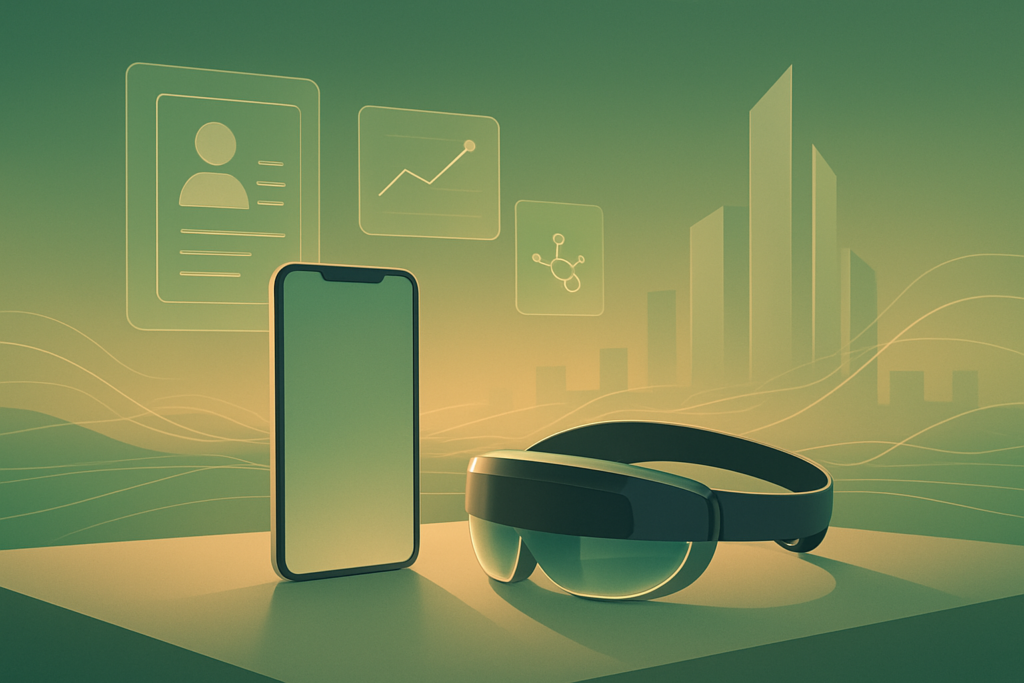
- Vision Pro (M5 Refresh): The latest iteration of Apple’s "spatial computer" features the M5 chip, improving refresh rates and weight distribution. While still a luxury item at $3,499, it serves as the R&D platform for future "Apple Glass" products.
Competitive Landscape
Apple operates in a "co-opetition" environment, where rivals are often also suppliers or partners.
- Samsung Electronics (KSE: 005930): Remains the primary rival in the premium smartphone space and a key supplier of display technology.
- Alphabet/Google (NASDAQ: GOOGL): A competitor in mobile OS (Android) but a partner in search and AI.
- Huawei: Has staged a significant comeback in the Chinese market, challenging Apple’s market share in a critical growth region.
- Meta Platforms (NASDAQ: META): The primary competitor in the burgeoning AR/VR and "Metaverse" space.
Apple’s competitive edge lies in its vertical integration—owning the chip, the hardware, and the software allows for optimization that rivals struggle to match.
Industry and Market Trends
The tech industry in 2026 is dominated by the "Edge AI" revolution. Instead of relying solely on massive data centers, companies are racing to put AI processing directly on consumer devices. Apple’s M-series and A-series silicon give it a distinct advantage here, providing the power-per-watt efficiency needed for complex AI tasks without compromising battery life.
Additionally, the trend toward "Silicon Self-Sufficiency" continues. Apple’s transition away from third-party modems and components (moving toward in-house Wi-Fi and Bluetooth chips) is nearing completion, further protecting its margins.
Risks and Challenges
Despite its dominance, Apple is not without significant risks:
- Regulatory Scrutiny: The US Department of Justice (DOJ) antitrust lawsuit is in a critical discovery phase. Simultaneously, the European Union’s Digital Markets Act (DMA) has already led to hundreds of millions in fines and forced Apple to allow third-party app stores, threatening the App Store’s lucrative commission model.
- China Concentration: While Apple is diversifying manufacturing to India and Vietnam, its reliance on China for both production and as a major consumer market remains a geopolitical vulnerability.
- Hardware Saturation: With smartphone replacement cycles lengthening, Apple must constantly innovate to justify its premium pricing.
Opportunities and Catalysts
- The "AI Super-Cycle": As older iPhones become incompatible with Apple Intelligence, analysts expect a massive wave of upgrades over the next 18 months.
- Health Tech: Rumors of non-invasive blood glucose monitoring and advanced cardiac sensors in the Apple Watch Series 12 could open up new revenue streams in the medical sector.
- Services Monetization: The potential for a "Premium AI" subscription tier could further expand Services revenue and ARPU (Average Revenue Per User).
Investor Sentiment and Analyst Coverage
Wall Street remains generally bullish on Apple. Wedbush Securities analyst Dan Ives has maintained a "Strong Buy" rating with a price target of $350, citing the "monetization of the AI era." However, more cautious analysts at firms like Piper Sandler highlight the stock’s high P/E ratio relative to historical norms, suggesting that much of the AI optimism may already be priced in.
Institutional ownership remains high, with Vanguard, BlackRock, and Berkshire Hathaway continuing to hold significant positions, though Warren Buffett’s firm has slightly trimmed its stake in recent periods to manage concentration.
Regulatory, Policy, and Geopolitical Factors
The geopolitical landscape for Apple is increasingly complex. In the US, the "Right to Repair" movement and labor unionization efforts at Apple Stores are growing. Internationally, the US-China trade relationship remains the single largest external variable for the company. Any escalation in tariffs or export controls on high-end silicon could disrupt Apple’s production schedules.
Furthermore, Apple’s commitment to "Apple 2030"—a goal to make its entire footprint carbon neutral—is a major policy driver, influencing everything from product packaging to its investments in renewable energy credits.
Conclusion
As of March 2026, Apple Inc. remains the quintessential "moat" company. It has successfully navigated the transition into the AI era, effectively integrating generative technology into its ecosystem without sacrificing the privacy-centric brand identity it has built over decades.
While legal challenges in the US and EU represent a genuine threat to the App Store’s traditional economics, the company’s sheer scale and cash-generating power provide a significant buffer. For investors, Apple is no longer a high-growth "tech" stock in the traditional sense, but a high-performance utility that powers the modern digital life. The key will be watching how well the "iPhone 17 Air" and Vision Pro initiatives take hold, and whether Apple can maintain its precarious balance in the Chinese market amidst shifting global alliances.
This content is intended for informational purposes only and is not financial advice.