
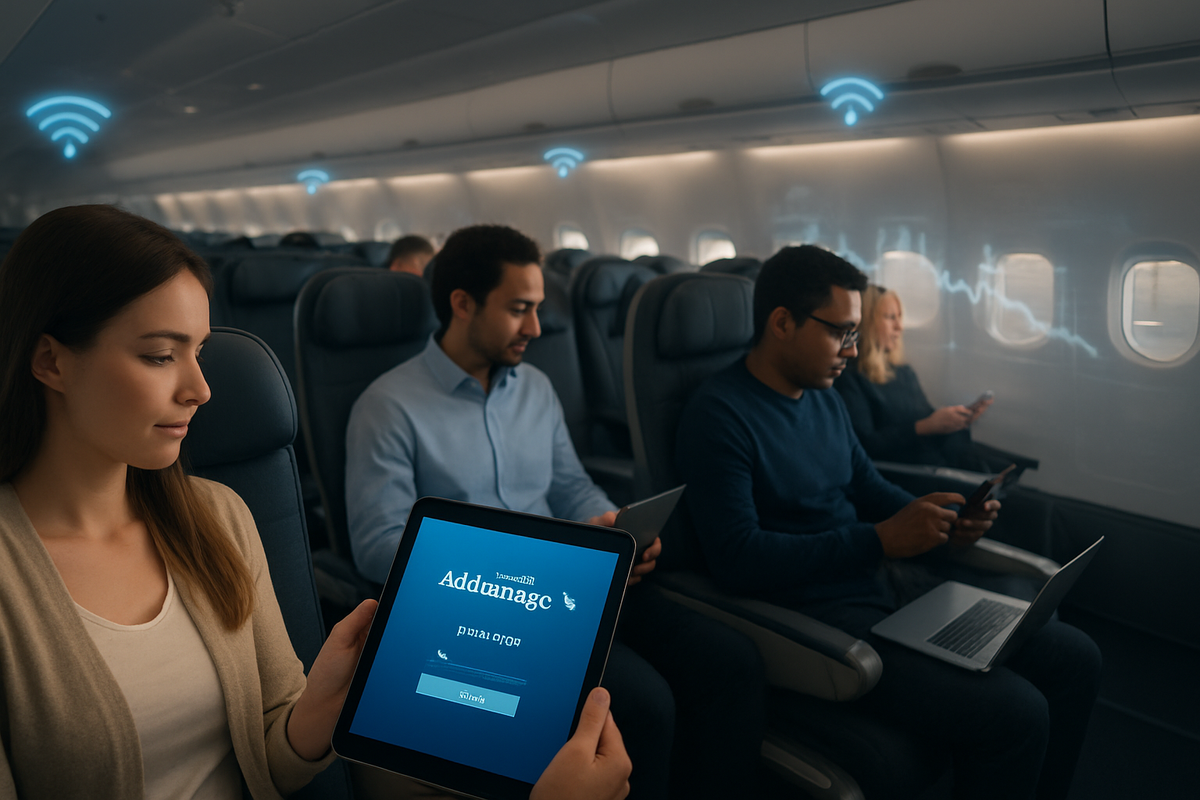
Shares of American Airlines (NASDAQ: AAL) experienced a modest pullback on Thursday, January 8, 2026, as investors began to scrutinize the financial implications of the carrier's aggressive new "free Wi-Fi" strategy. After a sharp rally earlier in the week, the stock settled around $15.96, reflecting a cautious consolidation phase. The market's hesitation comes just two weeks before the airline is scheduled to release its fourth-quarter and full-year 2025 financial results on January 22, leaving traders to balance the long-term benefits of enhanced customer loyalty against the immediate infrastructure costs of a massive fleet-wide technology upgrade.
The recent volatility underscores a pivotal moment for the Fort Worth-based carrier. While the launch of complimentary high-speed internet for loyalty members has been hailed as a major win for the passenger experience, it marks a significant shift in revenue strategy. By moving away from a pay-per-use model, American is betting that increased enrollments in its AAdvantage program and improved brand sentiment will eventually outweigh the loss of direct Wi-Fi revenue and the substantial costs associated with its new partnership with AT&T (NYSE: T).
The Cost of Connection: A Strategic Pivot Under Scrutiny
The current market movement follows a whirlwind week for American Airlines. On January 6, 2026, the company officially launched its free high-speed satellite Wi-Fi initiative, a move designed to close the competitive gap with rivals who have already moved toward complimentary connectivity. The rollout, powered by high-capacity Ka-band satellite technology from Viasat (NASDAQ: VSAT) and Intelsat, initially triggered a wave of optimism, sending shares up nearly 5% during the January 7 session to an intraday high of $16.50.
However, the "honeymoon phase" of the announcement met the reality of the balance sheet on January 8. Analysts have pointed out that while the service is "free" to passengers who join the AAdvantage program, it is far from free for the airline. The infrastructure required to support simultaneous high-definition streaming for hundreds of passengers across a fleet of over 900 aircraft involves significant capital expenditure and ongoing operational costs. Investors are particularly concerned about the impact on "Cost per Available Seat Mile" (CASM), a key industry metric, especially as the airline continues to manage a debt load that remains one of the highest in the industry at over $31 billion.
The timeline for this initiative is ambitious. American has already equipped 100% of its mainline narrowbody fleet and dual-class regional jets. The next phase, scheduled for completion by Spring 2026, aims to extend the service to nearly all domestic flights. However, a notable hurdle remains: the long-haul widebody fleet, which largely relies on older Panasonic technology, is currently excluded from the free tier. Retrofitting these larger aircraft for international routes will require further investment, a detail that has not escaped the notice of cautious institutional investors.
Winners and Losers in the "Wi-Fi Wars"
The primary winner in this scenario is undoubtedly the consumer and the AAdvantage loyalty ecosystem. By gatekeeping the free Wi-Fi behind a loyalty membership, American Airlines is effectively weaponizing its connectivity. This strategy is expected to drive a surge in new sign-ups, providing the airline with a treasure trove of first-party data that can be used for targeted marketing and credit card partnerships—a high-margin segment of the business.
On the corporate side, AT&T (NYSE: T) stands to gain significant brand visibility as the official sponsor of the service. For satellite providers like Viasat (NASDAQ: VSAT), the move cements their role as essential infrastructure partners, though they face the pressure of maintaining 60 Mbps speeds as usage rates skyrocket. Conversely, the "losers" in the short term may be the airline's own quarterly margins. Unlike Delta Air Lines (NYSE: DAL), which pioneered the free Wi-Fi model in 2023 and has already absorbed much of the initial setup costs, American is entering this phase during a period of heightened economic scrutiny.
Competitors are also feeling the heat. Delta Air Lines (NYSE: DAL) now faces a rival with a comparable—and in some ways, more recently updated—network. Meanwhile, United Airlines (NASDAQ: UAL) is currently in a race against time. United has partnered with SpaceX’s Starlink to provide Low Earth Orbit (LEO) connectivity, promising even higher speeds and lower latency. However, with American’s service now live across most of its domestic fleet, United finds itself playing catch-up in terms of immediate availability, potentially losing "connected" travelers to American in the interim.
The Data Play: Why Free Wi-Fi is the New Industry Standard
The shift toward free Wi-Fi is more than just a perk; it represents a fundamental change in how airlines view the "connected cabin." Historically, Wi-Fi was an unbundled, high-cost add-on. Today, it is increasingly viewed as a baseline expectation, similar to pressurized cabins or in-flight snacks. This transition fits into a broader industry trend of "premiumization," where carriers attempt to lure travelers away from low-cost competitors by offering a more integrated, high-end experience in the main cabin.
The regulatory and policy implications are also significant. As airlines collect more data through their loyalty-gated Wi-Fi portals, they fall under greater scrutiny regarding data privacy and cybersecurity. Furthermore, the reliance on satellite providers like Viasat and Starlink highlights the growing intersection between the aerospace and telecommunications industries. American's move follows the historical precedent set by the hotel industry two decades ago, where high-speed internet transitioned from a luxury revenue generator to a free, loyalty-driving necessity.
Looking Ahead: The January 22 Earnings Test
The short-term trajectory for AAL shares will likely be determined by the January 22 earnings call. Management will need to provide clear guidance on how they intend to monetize the influx of new AAdvantage members to offset the costs of the Wi-Fi rollout. Analysts are currently expecting Q4 revenue of approximately $14.09 billion, but the real focus will be on the 2026 outlook. If American can demonstrate that the Wi-Fi initiative is driving higher "load factors" (the percentage of seats filled) or increased spend on co-branded credit cards, the stock could quickly recover its recent losses.
In the long term, the "Wi-Fi wars" will likely evolve into a battle over quality. As United Airlines (NASDAQ: UAL) prepares to launch its Starlink-powered service later this year, American will need to ensure that its Viasat-backed system doesn't suffer from congestion as more passengers log on. Any degradation in service quality could turn a perceived "perk" into a source of customer frustration, undermining the very loyalty the program seeks to build.
Investor Takeaway: Watching the Margins
The minor slip in American Airlines' stock price on January 8 should be viewed as a healthy dose of market skepticism rather than a vote of no confidence. The airline has successfully modernized its fleet's connectivity, but it has done so at a time when investors are laser-focused on profitability and debt reduction. The upcoming earnings report will be the first real test of whether the "free Wi-Fi" era will be a tailwind for growth or a headwind for margins.
Investors should closely watch for two key metrics in the coming months: the growth rate of new AAdvantage enrollments and any shifts in CASM guidance. While the strategic move to match Delta and beat United to a wide-scale rollout is sound from a brand positioning standpoint, the financial execution remains the final frontier for American Airlines. As the industry moves toward a fully connected future, the winners will be those who can turn "free" data into "paid" loyalty.
This content is intended for informational purposes only and is not financial advice.