The optimistic "spring thaw" that investors had penciled into their calendars for early 2026 has officially been put on ice. As of March 13, 2026, a series of bruising economic data points and geopolitical flare-ups have forced a massive recalibration of expectations for the Federal Reserve’s interest rate path. What began the year as a consensus bet for a 25-basis-point cut in March or May has transformed into a grim acceptance that the central bank may remain sidelined for the foreseeable future.
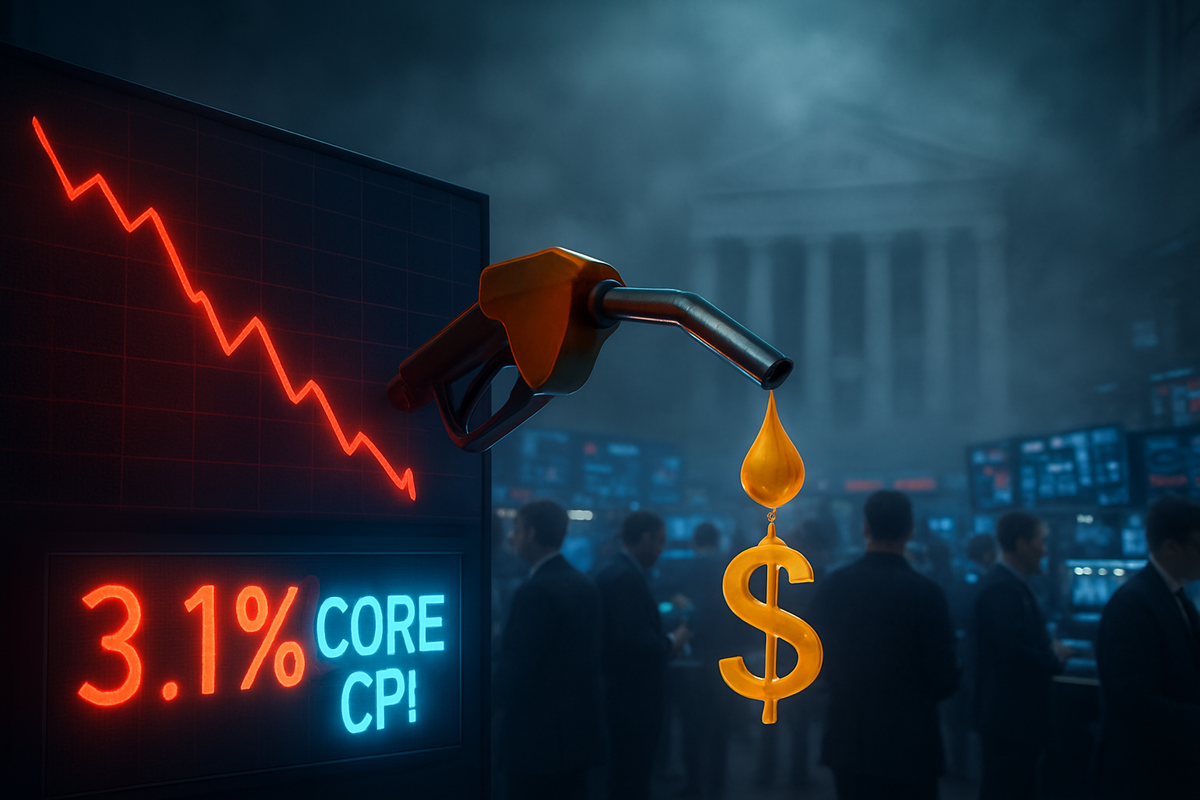
The dual catalysts for this shift are a surprisingly "sticky" core inflation reading and a parabolic move in energy costs. With Core Personal Consumption Expenditures (PCE) clocking in at 3.1% for January—well above the Fed’s 2% target—and a sudden $1.20-per-gallon jump in national gasoline prices following renewed Middle Eastern tensions, the narrative of a "soft landing" is facing its toughest test yet. For a market that had priced in a pivot toward easing, the reality of "higher for longer" is returning with a vengeance.
The January Shock and the Energy Spike: A Timeline of Disruption
The erosion of market confidence began in earnest following the January inflation report, which saw core prices rise by 3.1% year-over-year. This figure represented not just a stubborn plateau, but a slight acceleration from the 3.0% seen in December 2025, signaling that the "last mile" of the inflation fight is proving to be a marathon. Federal Reserve officials, including potential incoming Chair Kevin Warsh, have signaled that the persistence of service-sector inflation—particularly in housing and insurance—makes any immediate easing of monetary policy premature.
The situation worsened in late February 2026, when a significant escalation in the conflict affecting the Strait of Hormuz sent global energy markets into a tailspin. Crude oil prices briefly breached $120 per barrel, triggering an immediate and painful spike at the pump. The national average for gasoline jumped by approximately $1.20 per gallon in less than three weeks, reaching levels not seen since the 2022 energy crisis. This "energy tax" on consumers has effectively acted as a secondary inflationary pulse, complicating the Fed's ability to focus solely on cooling the labor market.
Market participants have reacted swiftly to these developments. In the weeks leading up to today, March 13, the yield on the 2-year U.S. Treasury note—a proxy for short-term interest rate expectations—surged from 3.8% to 4.4%, as traders erased nearly all probability of a rate cut before the third quarter of 2026. The Chicago Mercantile Exchange (CME) FedWatch Tool now shows a 75% probability that the federal funds rate will remain unchanged at the 3.5%–3.75% range through the summer.
Initial reactions from Wall Street have been characterized by a flight to safety. Small-cap stocks and rate-sensitive sectors, which had rallied on the hope of cheaper borrowing costs, saw significant sell-offs in the first two weeks of March. Meanwhile, the U.S. dollar has strengthened against a basket of currencies as international investors seek the yield offered by American debt, further complicating the global trade landscape.
Winners and Losers in the "Higher for Longer" Landscape
The persistence of high interest rates and surging energy prices is creating a stark divide between market winners and losers. Energy behemoths like ExxonMobil (NYSE: XOM) and Chevron (NYSE: CVX) have emerged as the primary beneficiaries of the geopolitical premium. ExxonMobil (NYSE: XOM), in particular, has seen its stock price reach record highs as it projects massive cash flows from its high-margin assets in the Permian Basin and Guyana. These companies are increasingly viewed as a hedge against the very inflation that is dampening the broader market.
In the financial sector, the news is a double-edged sword. Major institutions like JPMorgan Chase (NYSE: JPM) and Bank of America (NYSE: BAC) stand to benefit from higher net interest income (NII) as they maintain elevated lending rates. JPMorgan Chase (NYSE: JPM) recently revised its NII outlook upward for 2026, capitalizing on a "higher-for-longer" environment that allows for wider margins on its vast loan portfolio. However, these gains are tempered by the rising risk of loan defaults if the economy slows too abruptly under the weight of sustained high rates.
Conversely, the retail and consumer discretionary sectors are feeling the squeeze. Giants like Walmart (NYSE: WMT) and Target (NYSE: TGT) are navigating a complex environment where consumers are forced to redirect discretionary spending toward $4.00-plus gasoline. While Walmart (NYSE: WMT) remains resilient due to its "flight to value" appeal and strong private-label offerings, the rising costs of logistics and transportation are eating into margins. Retailers focused on high-ticket items, such as electronics or home furnishings, are seeing a distinct cooling in demand as the "wealth effect" from a cooling housing market begins to take hold.
Technology and high-growth companies are also facing renewed valuation pressure. Firms like Nvidia (NASDAQ: NVDA) and Apple (NASDAQ: AAPL), which rely on future cash flow projections, are seeing their multiples compressed as the discount rate remains high. While Nvidia (NASDAQ: NVDA) continues to benefit from the secular AI boom, the broader tech sector is no longer enjoying the tailwind of anticipated rate cuts, forcing a shift in investor focus toward immediate profitability and "efficiency" rather than speculative growth.
A Historical Echo and the Policy Dilemma
The current economic backdrop bears a striking resemblance to the "stop-and-go" inflation cycles of the 1970s. Economists are warning that if the Federal Reserve cuts rates too early, it risks a secondary wave of inflation that could become permanently anchored. The 3.1% core reading is particularly alarming because it suggests that inflation is becoming structural rather than transitory. The Fed’s transition from a "soft landing" objective to a "risk-management" framework reflects a hard-learned lesson: the cost of entrenched inflation is far higher than the cost of a mild recession.
This event also highlights the fragility of global supply chains and their direct impact on domestic policy. The $1.20 jump in gas prices is a reminder that the Fed cannot control the "supply-side" shocks that drive headline inflation. As geopolitical instability becomes a persistent feature of the mid-2024s, the traditional tools of monetary policy—adjusting interest rates to dampen demand—are becoming increasingly blunt instruments. This has led to growing calls for fiscal policy interventions to address energy security and supply chain resilience.
Furthermore, the transition of leadership at the Federal Reserve adds a layer of uncertainty. With the potential arrival of a new Chair in May 2026, markets are questioning whether the central bank’s independence will remain intact or if political pressure to lower rates ahead of election cycles will override data-dependent decision-making. Historically, periods of Fed leadership transition have been marked by increased market volatility as investors test the resolve of the new regime.
Regulatory and policy implications are also emerging in the banking sector. High rates for longer mean that the "unrealized losses" on bank balance sheets—a major theme of the 2023 regional banking crisis—remain a latent threat. Regulators are closely watching smaller institutions that may be overexposed to commercial real estate, a sector that is struggling to refinance debt at current levels. The "sticky" inflation narrative essentially prevents the Fed from providing the liquidity relief many of these institutions were counting on by the spring of 2026.
Strategic Pivots and the Road Ahead
In the short term, the market must adjust to a reality where the "Fed put"—the idea that the central bank will step in to save markets with rate cuts—is no longer on the table. Companies across all sectors are likely to undergo strategic pivots, prioritizing debt reduction and cash preservation over aggressive expansion. We are already seeing a trend of "efficiency-first" corporate strategies, where AI and automation are leveraged not just for growth, but to offset the rising costs of labor and energy.
Long-term, the "terminal rate"—the neutral interest rate that neither stimulates nor restricts the economy—may be much higher than the 2.5% many had hoped for. If 3% inflation is the new "normal" due to deglobalization and energy volatility, then interest rates in the 4% to 5% range may also become the new standard. This would represent a fundamental shift in the investing landscape, favoring "value" stocks with strong dividends and stable cash flows over "growth" stocks that thrived in the era of zero-interest-rate policy (ZIRP).
Potential scenarios for the remainder of 2026 include a "sideways" market, where stocks trade within a tight range as they digest the lack of monetary support. However, if gas prices continue to climb and core inflation refuses to budge, the risk of "stagflation"—low growth combined with high inflation—will move from a theoretical concern to a dominant market theme. Investors should prepare for a volatile summer, with every CPI and PCE report carrying the weight of a major market-moving event.
Navigating the New Normal: Key Takeaways
The fading hopes for a spring rate cut serve as a stark reminder that the battle against inflation is far from over. The convergence of a 3.1% core inflation reading and a massive energy shock has effectively reset the clock on the Federal Reserve’s easing cycle. For investors, the takeaway is clear: the path to 2% inflation is not a straight line, and the "higher for longer" mantra is not just rhetoric—it is a functional reality that will dictate market movements for the rest of the year.
Moving forward, the market will be hyper-focused on energy stability and the upcoming Fed leadership transition. Any cooling in Middle Eastern tensions could provide the relief needed to bring headline inflation down, but the "sticky" nature of core services inflation suggests that the Fed’s hands will remain tied regardless of what happens at the gas pump. The resilience of the consumer will be the ultimate barometer of whether the economy can withstand these twin pressures without tipping into a deep recession.
In the coming months, investors should watch for a widening performance gap between companies with high pricing power and those with high debt loads. The era of easy money is firmly in the rearview mirror, and the "Spring of 2026" will likely be remembered as the moment the market finally accepted that the transition to a high-rate environment is a permanent structural shift rather than a temporary cyclical hurdle.
This content is intended for informational purposes only and is not financial advice.