
Insurance distribution company Baldwin Insurance Group (NASDAQ: BWIN) fell short of the market’s revenue expectations in Q4 CY2025, but sales rose 5.3% year on year to $347.3 million. Its non-GAAP profit of $0.31 per share was 7.3% above analysts’ consensus estimates.
Is now the time to buy Baldwin Insurance Group? Find out by accessing our full research report, it’s free.
Baldwin Insurance Group (BWIN) Q4 CY2025 Highlights:
- Revenue: $347.3 million vs analyst estimates of $352.4 million (5.3% year-on-year growth, 1.4% miss)
- Adjusted EPS: $0.31 vs analyst estimates of $0.29 (7.3% beat)
- Adjusted EBITDA: $69.65 million vs analyst estimates of $69.23 million (20.1% margin, 0.6% beat)
- Operating Margin: -3.8%, down from -1.7% in the same quarter last year
- Free Cash Flow was $10.96 million, up from -$14.45 million in the same quarter last year
- Organic Revenue rose 3% year on year (miss)
- Market Capitalization: $1.62 billion
"2025 was a year of significant progress for The Baldwin Group. We delivered our sixth consecutive year of top-of-industry organic growth, expanded margins, and grew adjusted diluted EPS by double digits," said Trevor Baldwin, CEO, The Baldwin Group
Company Overview
Rebranded from BRP Group in May 2024, Baldwin Insurance Group (NASDAQ: BWIN) is an independent insurance distribution company that provides tailored insurance, risk management, and employee benefits solutions to businesses and individuals.
Revenue Growth
A company’s long-term sales performance can indicate its overall quality. Any business can put up a good quarter or two, but the best consistently grow over the long haul.
With $1.50 billion in revenue over the past 12 months, Baldwin Insurance Group is a mid-sized business services company, which sometimes brings disadvantages compared to larger competitors benefiting from better economies of scale. On the bright side, it can still flex high growth rates because it’s working from a smaller revenue base.
As you can see below, Baldwin Insurance Group’s sales grew at an incredible 44.3% compounded annual growth rate over the last five years. This is a great starting point for our analysis because it shows Baldwin Insurance Group’s demand was higher than many business services companies.
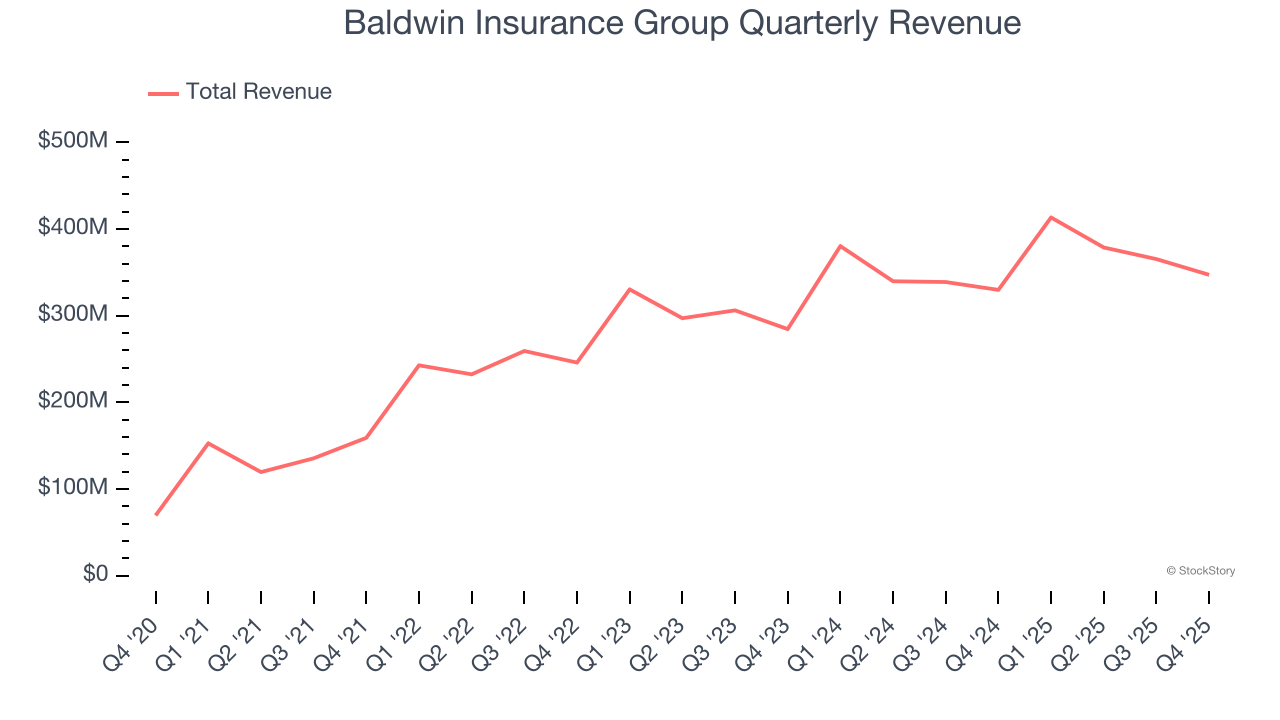
We at StockStory place the most emphasis on long-term growth, but within business services, a half-decade historical view may miss recent innovations or disruptive industry trends. Baldwin Insurance Group’s annualized revenue growth of 11.1% over the last two years is below its five-year trend, but we still think the results suggest healthy demand. 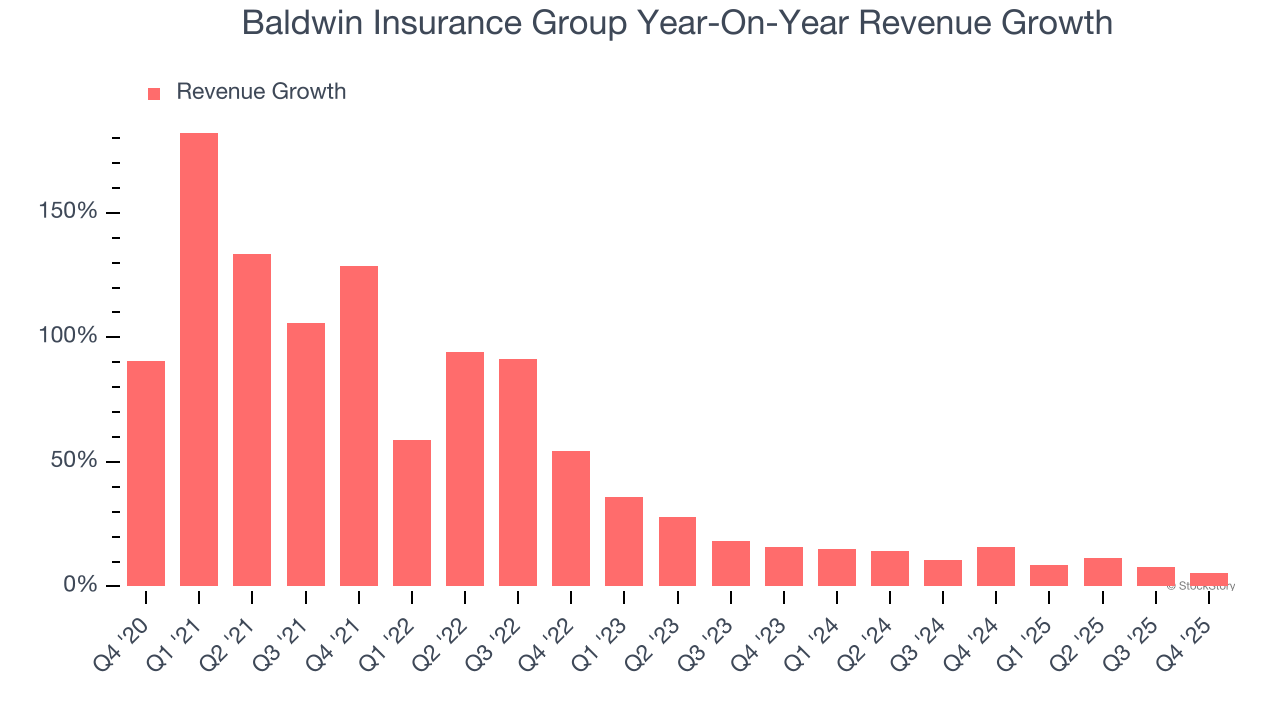
Baldwin Insurance Group also reports organic revenue, which strips out one-time events like acquisitions and currency fluctuations that don’t accurately reflect its fundamentals. Over the last two years, Baldwin Insurance Group’s organic revenue averaged 12.1% year-on-year growth. Because this number aligns with its two-year revenue growth, we can see the company’s core operations (not acquisitions and divestitures) drove most of its results. 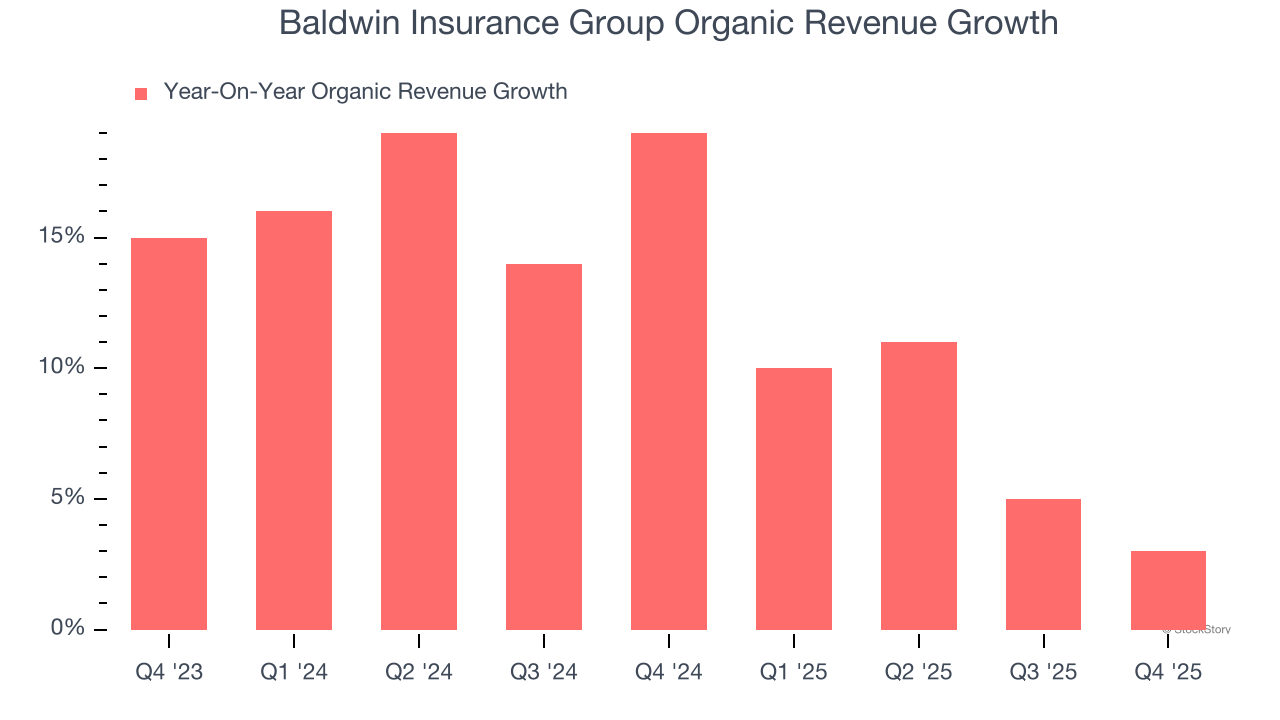
This quarter, Baldwin Insurance Group’s revenue grew by 5.3% year on year to $347.3 million, missing Wall Street’s estimates.
Looking ahead, sell-side analysts expect revenue to grow 28.3% over the next 12 months, an improvement versus the last two years. This projection is eye-popping and implies its newer products and services will spur better top-line performance.
Microsoft, Alphabet, Coca-Cola, Monster Beverage—all began as under-the-radar growth stories riding a massive trend. We’ve identified the next one: a profitable AI semiconductor play Wall Street is still overlooking. Go here for access to our full report.
Operating Margin
Baldwin Insurance Group was roughly breakeven when averaging the last five years of quarterly operating profits, inadequate for a business services business.
On the plus side, Baldwin Insurance Group’s operating margin rose by 10.5 percentage points over the last five years, as its sales growth gave it immense operating leverage.
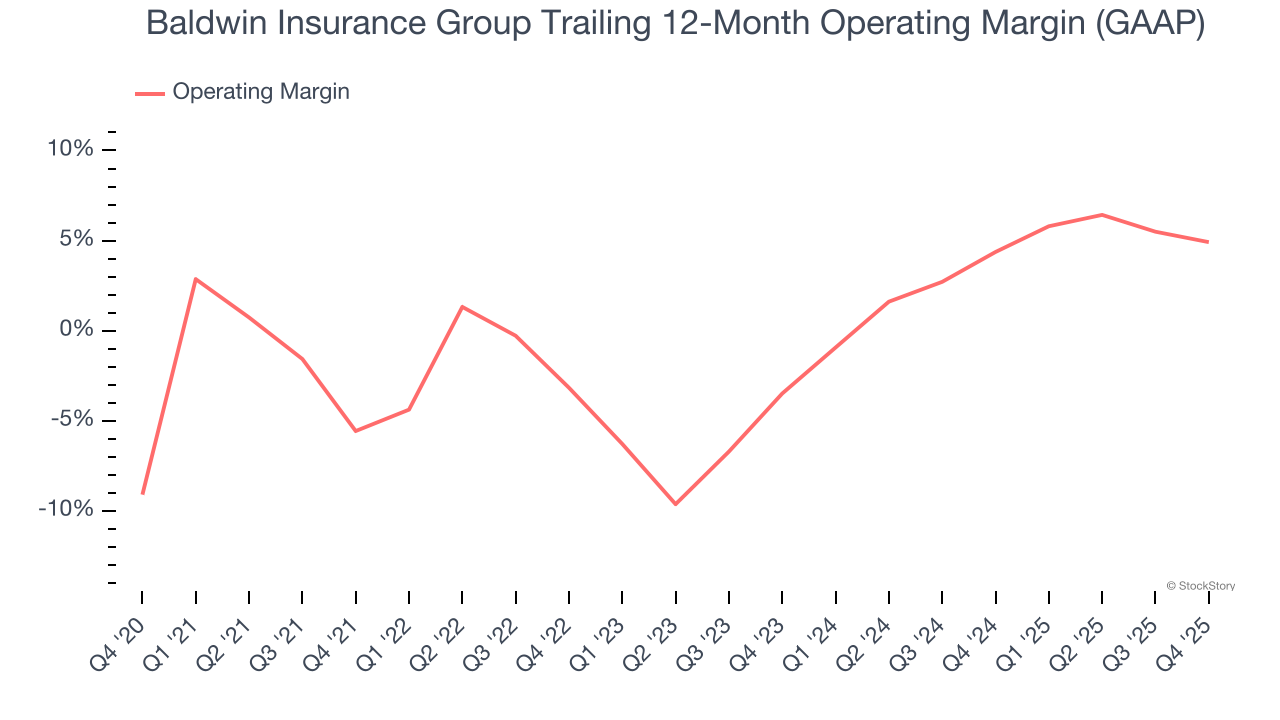
In Q4, Baldwin Insurance Group generated an operating margin profit margin of negative 3.8%, down 2.2 percentage points year on year. This contraction shows it was less efficient because its expenses grew faster than its revenue.
Earnings Per Share
We track the long-term change in earnings per share (EPS) for the same reason as long-term revenue growth. Compared to revenue, however, EPS highlights whether a company’s growth is profitable.
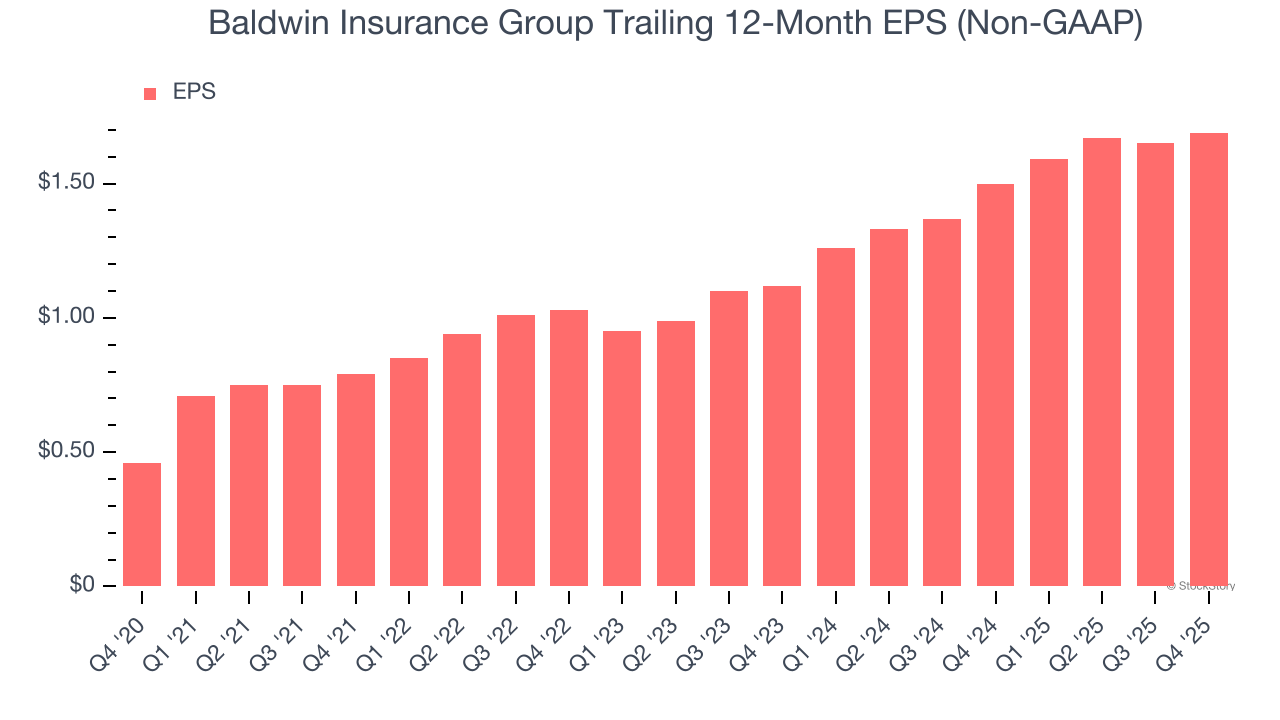
Baldwin Insurance Group’s EPS grew at an astounding 29.7% compounded annual growth rate over the last five years. Despite its operating margin improvement during that time, this performance was lower than its 44.3% annualized revenue growth, telling us that non-fundamental factors such as interest and taxes affected its ultimate earnings.
Diving into the nuances of Baldwin Insurance Group’s earnings can give us a better understanding of its performance. A five-year view shows Baldwin Insurance Group has diluted its shareholders, growing its share count by 94.4%. This dilution overshadowed its increased operational efficiency and has led to lower per share earnings. Taxes and interest expenses can also affect EPS but don’t tell us as much about a company’s fundamentals. 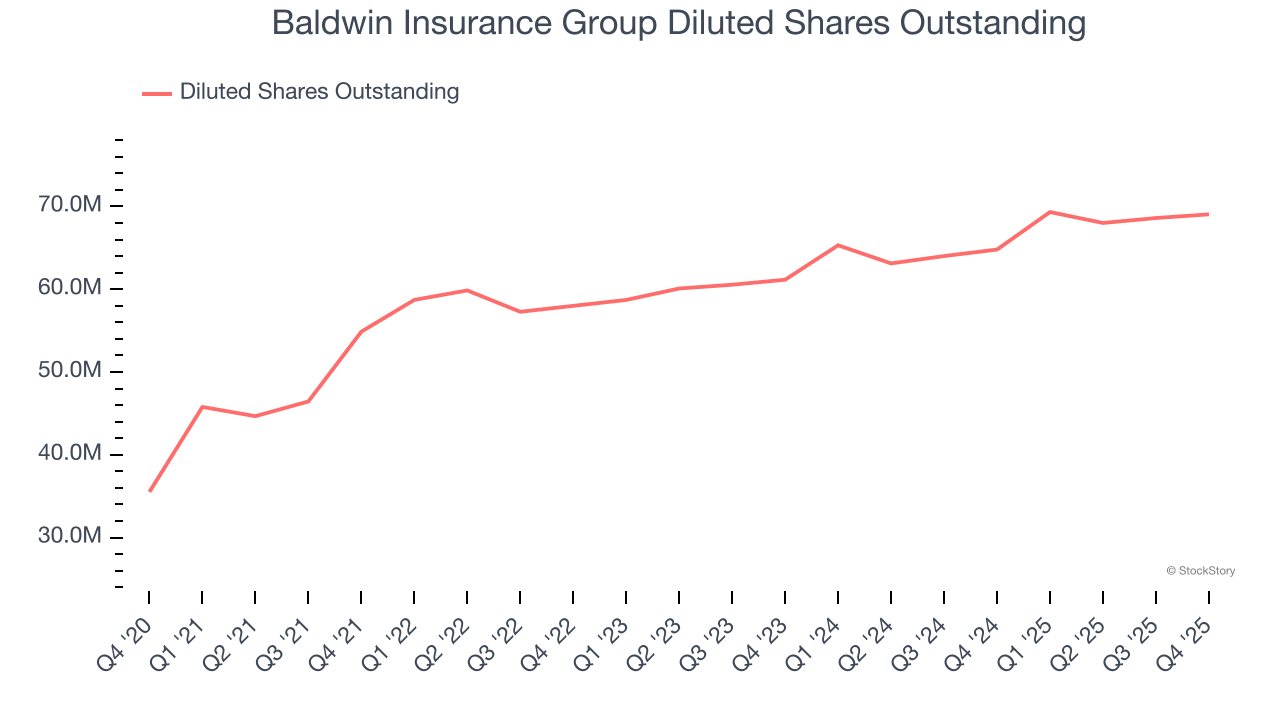
Like with revenue, we analyze EPS over a shorter period to see if we are missing a change in the business.
For Baldwin Insurance Group, its two-year annual EPS growth of 22.8% was lower than its five-year trend. We still think its growth was good and hope it can accelerate in the future.
In Q4, Baldwin Insurance Group reported adjusted EPS of $0.31, up from $0.27 in the same quarter last year. This print beat analysts’ estimates by 7.3%. Over the next 12 months, Wall Street expects Baldwin Insurance Group’s full-year EPS of $1.69 to grow 21.5%.
Key Takeaways from Baldwin Insurance Group’s Q4 Results
It was good to see Baldwin Insurance Group beat analysts’ EPS expectations this quarter. On the other hand, its revenue slightly missed and its organic revenue fell short of Wall Street’s estimates. Overall, this was a weaker quarter. The stock traded up 4.2% to $19.27 immediately after reporting.
Is Baldwin Insurance Group an attractive investment opportunity right now? We think that the latest quarter is only one piece of the longer-term business quality puzzle. Quality, when combined with valuation, can help determine if the stock is a buy. We cover that in our actionable full research report which you can read here (it’s free).