
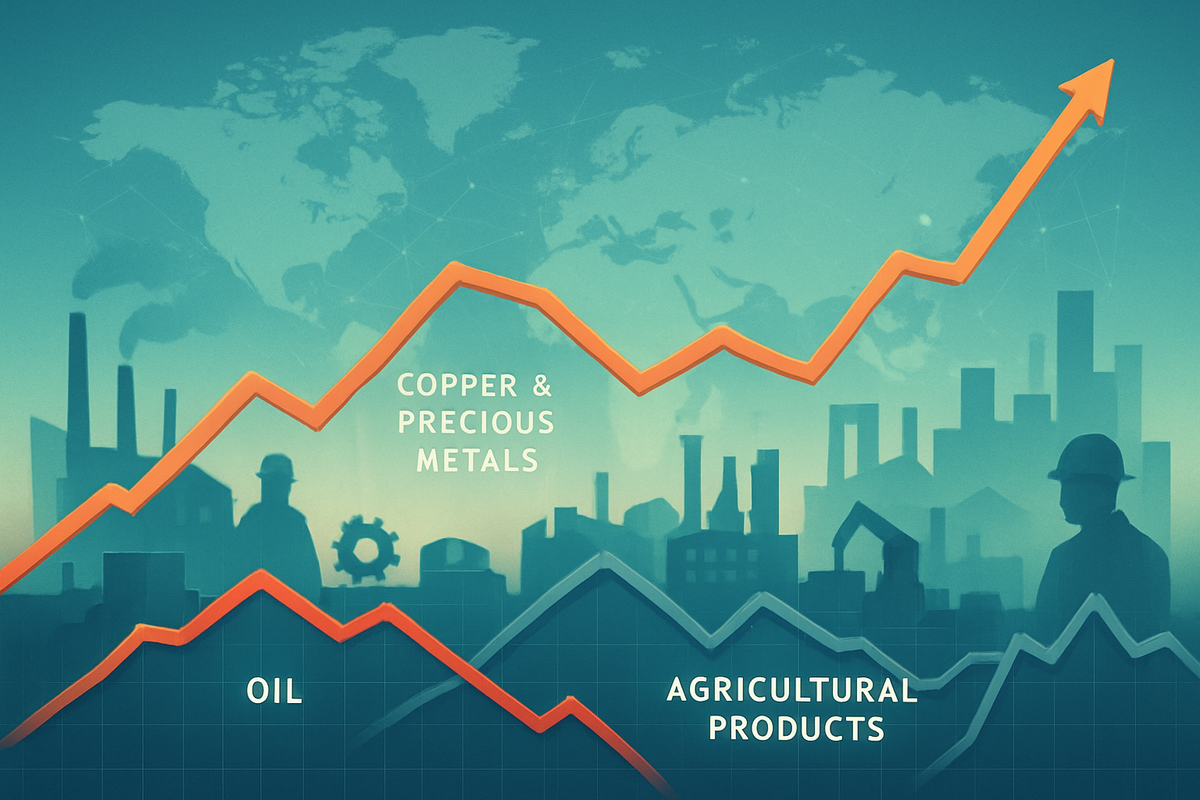
As the global economy progresses through late 2025, a complex and often contradictory landscape of commodity prices is reshaping the outlook for manufacturing and employment worldwide. While overall commodity prices are projected to moderate, heading towards a six-year low in 2026, driven by subdued global economic activity and an expanding oil surplus, specific sectors are experiencing significant upward momentum. This divergence creates a challenging environment for industries reliant on raw materials, impacting production costs, investment decisions, and ultimately, job creation. The immediate implications include an easing of broad inflationary pressures, yet targeted cost increases for certain manufacturers, and a noticeable softening in key labor markets, prompting central banks like the U.S. Federal Reserve to initiate monetary easing.
The ripple effects of these shifting commodity dynamics are profound, extending from the factory floor to consumer spending habits. Manufacturers face a dual challenge: benefiting from lower energy costs in some areas while grappling with surging prices for critical industrial metals and specific agricultural inputs. This volatility introduces a layer of uncertainty into supply chains and long-term planning, compelling businesses to re-evaluate sourcing strategies and production efficiencies. Meanwhile, the labor market is responding with a slower pace of job creation and a projected rise in unemployment, particularly in manufacturing, as policy uncertainties and economic moderation take hold.
Divergent Trends Define a Tumultuous Commodity Landscape
The latter half of 2025 has been marked by a fascinating dichotomy in commodity markets. Energy prices, particularly crude oil, are on a downward trajectory, with Brent crude projected to average around $58 per barrel (bbl) in Q4 2025 and further declines anticipated into 2026. This decline is largely attributed to an oversupply fueled by robust non-OPEC+ production, the unwinding of OPEC+ supply cuts, and moderating demand partly due to the accelerating adoption of electric vehicles. This broad softening in fossil fuel costs offers some respite to energy-intensive manufacturing sectors, helping to manage operational expenses.
However, not all energy commodities are following suit. Natural gas prices, especially Henry Hub, are on an upward climb, expected to reach $3.90 per MMBtu in Q4 2025 and $4.30 per MMBtu in 2026, driven by flat production and increasing liquefied natural gas (LNG) exports. Surprisingly, coal demand remains strong, buoyed by significant electricity load growth from data centers and EV charging infrastructure, which has outpaced renewable energy expansion. This mixed energy picture means that while some industries benefit from cheaper oil, others face rising utility costs.
The metals and minerals sector presents an even starker contrast. While industrial metal prices are generally forecast to decline by 10% in 2025 due to slowing global growth, strategic metals vital for the energy transition and technological advancements are soaring. Copper, for instance, has hit a new record of over $11,600 per tonne on the London Metal Exchange (LME), propelled by electrification initiatives, renewable energy systems, AI data centers, and persistent supply bottlenecks. Aluminum is similarly gaining support from robust demand in these high-growth sectors. Conversely, iron ore prices are projected to fall by 10% due to weak Chinese steel demand and ample supply. Precious metals, especially gold and silver, are also experiencing a historic bull run, with gold reaching $3,200 per ounce in April 2025 and silver nearly doubling in price due to shortages and strong investment demand.
Agricultural commodity prices are broadly softening, projected to decline by 7% in 2025, thanks to stabilizing global supply and lower energy costs. Major grains like wheat and corn have seen ample supplies. Yet, specific items like eggs (+24.6%) and beef (+8.8%) have led food price gains due to supply constraints, and sugar and coffee prices have surged due to weather-related disruptions. A significant concern for the agricultural sector is the projected 21% rise in fertilizer prices in 2025, driven by higher input costs and trade restrictions, which will impact farming profitability and food production costs. These diverse movements underscore a highly fragmented commodity market, where macro trends mask significant micro-level volatility and specific industry impacts.
Corporate Fortunes Diverge Amidst Commodity Swings
The current commodity landscape in late 2025 is creating a clear delineation between winners and losers across global industries. In the energy sector, the anticipated decline in crude oil prices is likely to challenge upstream oil exploration and production (E&P) companies, whose revenues are directly tied to selling prices. Conversely, downstream oil refiners and petrochemical companies stand to benefit significantly. Companies like Marathon Petroleum (NYSE: MPC) and Valero Energy (NYSE: VLO) could see expanded crack spreads as their input costs (crude oil) fall while demand for refined products remains relatively stable, boosting their refining margins. The flip side of the energy coin sees rising natural gas prices benefiting dedicated natural gas producers such as EQT Corporation (NYSE: EQT) and Chesapeake Energy (NASDAQ: CHK), but posing a cost burden for heavy industrial users of natural gas, including certain chemical manufacturers and electric utilities.
The mining sector is experiencing a robust period for specific commodities. Companies with significant exposure to copper are poised for substantial gains, given the metal's record-high prices driven by the global electrification push and demand from AI data centers. Major global copper producers like Freeport-McMoRan (NYSE: FCX) and Southern Copper (NYSE: SCCO) are well-positioned to capitalize on these trends, seeing increased revenues and profitability. Similarly, the surge in precious metals prices, fueled by geopolitical uncertainties and central bank purchases, is a boon for gold and silver miners. Leading companies such as Newmont Corporation (NYSE: NEM), Barrick Gold Corporation (NYSE: GOLD), and silver-focused Pan American Silver Corp. (NYSE: PAAS) are expected to report strong financial performances. However, manufacturers heavily reliant on these soaring metals, such as electrical equipment makers and electronics firms, will face increased raw material costs, potentially compressing their profit margins if they lack sufficient pricing power or hedging strategies.
In the agricultural sector, the outlook is more nuanced. While overall agricultural commodity prices are softening, farmers and large-scale agricultural operations face a significant challenge from rising input costs, particularly for fertilizers and diesel. This dynamic could squeeze profit margins for many producers, even as certain commodity prices like beef and some grains remain elevated due to specific supply constraints. In contrast, companies that supply these critical agricultural inputs are likely to thrive. Major fertilizer producers such as Nutrien Ltd. (TSX: NTR) and The Mosaic Company (NYSE: MOS) are expected to see robust demand and potentially higher pricing for their products, positioning them as beneficiaries of these cost pressures on farmers.
For the broader manufacturing sector, the impact is highly diversified. Companies with high energy consumption, especially those with extensive transportation needs or reliance on oil-derived feedstocks, may see some relief from declining crude oil prices. However, manufacturers whose industrial processes are heavily dependent on natural gas or whose products incorporate significant amounts of copper or other industrial metals will contend with elevated raw material and energy bills. Their ability to adapt through operational efficiencies, strategic hedging, and the capacity to pass on costs to consumers will be crucial in determining their financial resilience in this volatile commodity environment.
Wider Significance: A Confluence of Global Forces
The current shifts in commodity prices are not isolated market fluctuations but rather symptoms of profound structural changes and geopolitical forces at play. These dynamics are deeply intertwined with the global energy transition, where the push towards decarbonization is simultaneously dampening demand for fossil fuels (contributing to oil's decline) and skyrocketing the need for critical minerals like copper, lithium, and cobalt for electric vehicles, renewable energy infrastructure, and advanced technologies like AI data centers. This creates a complex investment landscape, with declining upstream oil and gas investments contrasting sharply with surging capital flows into low-carbon solutions and grid modernization.
A critical overarching theme is supply chain resilience. Geopolitical tensions, trade wars, and policy uncertainties are compelling nations and corporations to fundamentally re-evaluate their sourcing strategies. The U.S., for instance, is seeing divergent energy policies, with a federal push towards fossil fuel expansion potentially clashing with state-level emissions regulations. Simultaneously, proposed tariffs on key imports and a reconsideration of clean energy tax credits could significantly alter supply chains and manufacturing costs. This environment fosters a trend of resource nationalism, particularly in developing nations rich in critical minerals, as governments seek greater control, local processing, and value addition to secure their economic interests and enhance national security. Such policies, while aiming for self-sufficiency, can also introduce new complexities and potential investment deterrents.
Historically, periods of significant commodity price volatility often align with "supercycles" driven by major industrialization waves or technological shifts. While the current environment doesn't perfectly mirror past crises like the 1973 oil shock or the 2007-2008 financial crisis, it shares characteristics of geopolitical instability, supply chain vulnerabilities, and the profound impact of global economic shifts on raw material markets. The ongoing fragmentation of the global political landscape, characterized by sanctions, tariffs, and unreliable alliances, serves as a primary driver of this volatility. Developing economies heavily reliant on commodity exports face increased uncertainty, while businesses globally are forced to invest in R&D for material substitution, efficiency improvements, and forging new, often geopolitically aligned, international partnerships to secure resources. Governments are responding with a mix of market interventions, efforts towards energy independence, strategic reserves, and robust fiscal and monetary policies to navigate these turbulent waters.
What Comes Next: Navigating a Future of Transformation
Looking ahead into 2026 and beyond, the global economy is poised for continued transformation, with commodity markets, manufacturing, and employment undergoing significant shifts. Overall commodity prices are projected to continue their downward moderation, with Brent crude expected to average around $60 per barrel in 2026. However, the divergence will persist: copper is anticipated to remain exceptionally strong, with 15-20% price growth through 2026, driven by electrification and AI demand. Precious metals like gold and silver are also forecast to maintain their bullish run. Conversely, industrial metals like aluminum and iron ore may face renewed pressure, and agricultural prices, while generally easing, will remain susceptible to weather and geopolitical events.
For the manufacturing sector, 2026 will be characterized by cautious, uneven growth, particularly in advanced economies. The emphasis will be on intelligent automation and AI integration, extending beyond production lines to encompass planning, maintenance, and supply chain management. Businesses must prioritize supply chain diversification and regionalization, moving away from purely cost-driven global models to risk-mitigation strategies through nearshoring and multi-sourcing. This strategic pivot is essential to build resilience against geopolitical risks, trade barriers, and natural disasters. Furthermore, workforce upskilling to foster AI fluency and human-AI collaboration will be critical to address persistent skills gaps and enhance productivity in an increasingly mechanized future.
Emerging markets are expected to be key drivers of global growth, particularly in Asia, benefiting from outperforming AI and tech-related exports. These markets offer attractive valuations and investment returns, supported by improved fiscal discipline and demographic advantages. However, they also face challenges from persistent geopolitical risks, the potential impact of U.S. tariffs on non-AI related exports, and the broader risks of a global economic slowdown. Possible scenarios for the global economy range from a baseline of moderate growth with navigable challenges, supported by easing inflation and central bank rate cuts, to an extended period of "stagflation lite" with cautious growth, or even a mild global recession if economic headwinds intensify. Businesses must therefore adopt agile strategies, invest strategically in technology, and build robust supply chains to navigate these complex and evolving market conditions.
Comprehensive Wrap-up: Adapting to Enduring Volatility
The shifting commodity price landscape in late 2025 underscores a fundamental truth: global markets are entering an era of enduring volatility, driven by a confluence of geopolitical instability, the accelerating energy transition, and the pervasive impacts of climate change. The key takeaway is the dual nature of these shifts—an overall moderation in commodity prices coexisting with significant surges in strategic materials like copper and precious metals, and localized pressures in areas like natural gas and fertilizers. This creates a complex environment for manufacturers, who must contend with unpredictable input costs that directly impact their profit margins and operational viability.
Moving forward, the market will continue to be shaped by these powerful forces. Supply chain resilience has transitioned from a buzzword to an imperative, pushing companies towards regionalization and diversification to mitigate risks. The energy transition, while a long-term goal, introduces immediate challenges in securing critical minerals and managing the phase-out of traditional energy sources. Governments, in turn, are grappling with the delicate balance of energy security, food security, and climate objectives, often resorting to market interventions, strategic reserves, and trade policies that further influence commodity flows.
The lasting impact of this period will likely be a structural transformation in manufacturing, characterized by increased automation, the widespread adoption of AI-driven processes, and a fundamental reshaping of global supply chains. For investors, the coming months demand vigilance. Key indicators to watch include geopolitical developments, particularly in energy-producing regions and trade relations; the trajectory of central bank monetary policies and global inflation data; the economic performance of major commodity consumers like China; and policy shifts related to the energy transition and critical mineral supply. By closely monitoring these factors, investors can better understand the evolving risks and opportunities within this dynamically shifting commodity landscape.
This content is intended for informational purposes only and is not financial advice