
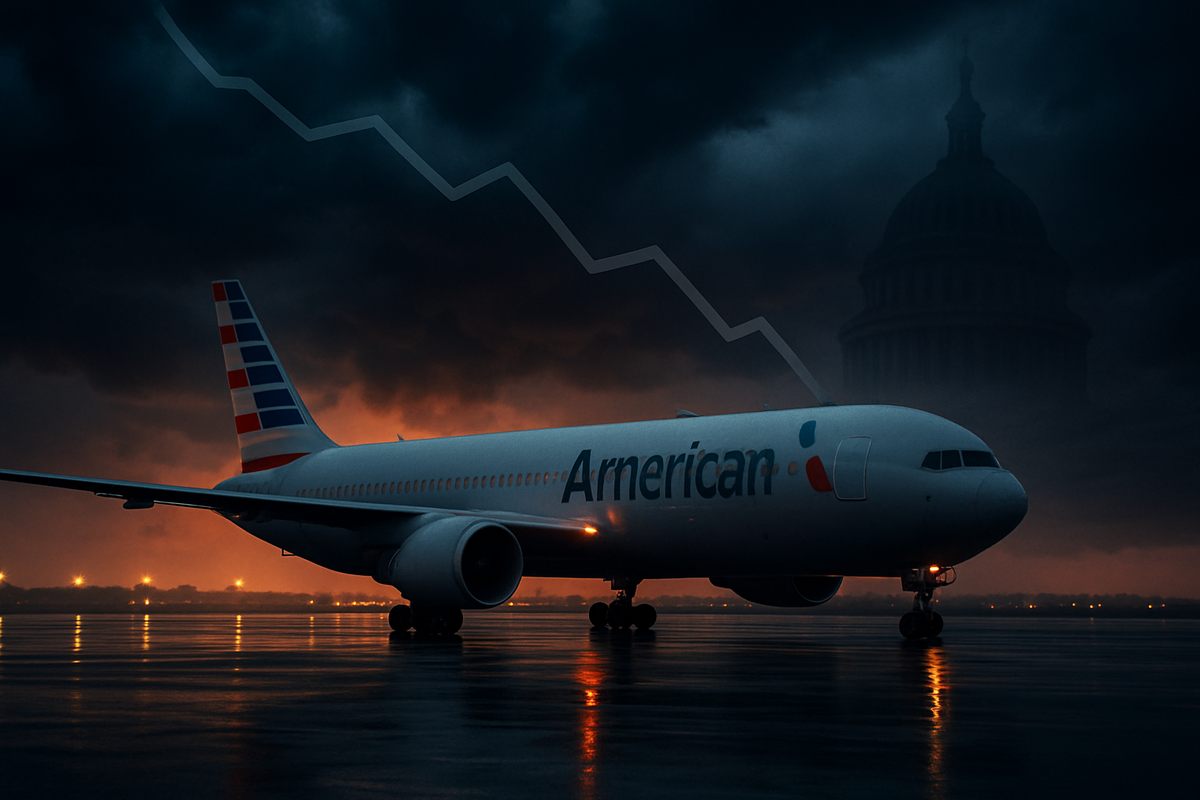
As 2025 draws to a close, American Airlines (NASDAQ: AAL) finds itself grounded by a new wave of federal scrutiny. On December 23, 2025, the Federal Aviation Administration (FAA) intensified its investigation into whether the carrier failed to comply with mandatory flight reductions during the recent 43-day federal government shutdown. This latest probe adds a somber capstone to a year defined by safety failures, a tragic mid-air collision, and a stock price that has plummeted more than 28% since January.
The immediate implications for the Fort Worth-based carrier are severe. With potential civil penalties reaching $75,000 per non-compliant flight, the financial overhang could run into the hundreds of millions. For investors, the probe is a stark reminder of the operational and regulatory hurdles that have plagued American Airlines throughout 2025, casting a long shadow over its ability to compete with more stable peers in the coming year.
A Year of Regulatory Reckoning
The current FAA investigation centers on an Emergency Order issued in November 2025, which mandated a 10% reduction in flights at 40 "high-impact" airports, including American’s primary hubs at Dallas/Fort Worth (DFW) and Charlotte (CLT). The order was designed to alleviate pressure on an understaffed and unpaid air traffic control workforce during the October–November government shutdown. However, preliminary FAA data suggests that American Airlines may have continued to operate a significant number of scheduled flights that should have been grounded, potentially compromising the safety of the national airspace.
This probe is the latest in a series of high-stakes challenges for the airline. The timeline of 2025 began with the industry's darkest day in decades: the January 29 mid-air collision of American Eagle Flight 5342 with a U.S. Army Black Hawk helicopter near Ronald Reagan Washington National Airport. The disaster, which claimed 67 lives, triggered a massive National Transportation Safety Board (NTSB) investigation. While the U.S. government recently admitted partial fault due to air traffic control errors, the event put American’s safety management systems under a microscope for the remainder of the year.
Key stakeholders, including the Allied Pilots Association (APA), have been vocal about their concerns. Earlier in 2024, the union warned of a "significant spike" in maintenance issues, ranging from tools left in wheel wells to a decrease in routine inspections. These internal warnings, followed by the January crash and the current shutdown compliance probe, have created a narrative of a carrier struggling to maintain operational integrity under financial pressure.
Winners and Losers in a Volatile Market
The fallout from American’s regulatory woes has created a clear divide in the aviation sector. American Airlines (NASDAQ: AAL) is the primary loser, with its stock currently trading near multi-year lows between $11 and $12 per share. The company’s removal from the S&P 500 in late 2024 served as a precursor to this year’s decline, signaling a loss of institutional confidence that has only deepened as the FAA probes mount.
Conversely, competitors like Delta Air Lines (NYSE: DAL) and United Airlines (NASDAQ: UAL) have managed to navigate the 2025 shutdown with fewer public rebukes. Delta, in particular, has positioned itself as the "premium" and "reliable" alternative, potentially capturing high-value corporate travelers who are wary of American’s operational instability. Southwest Airlines (NYSE: LUV) also stands to benefit in the domestic market, provided it can maintain its own safety record while American is forced to potentially trim its schedule further to appease regulators.
However, the "winners" are only such in a relative sense. The entire industry faces higher costs from the newly passed ROTOR Act, a direct legislative response to the January collision that mandates stricter visual separation and radio synchronization protocols. While Delta and United may gain market share from American, they are also operating in a more restrictive and expensive regulatory environment than they were two years ago.
Broader Industry Trends and Ripple Effects
The scrutiny on American Airlines fits into a broader trend of "aggressive oversight" adopted by the FAA and the Department of Transportation (DOT) under the current administration. In October 2024, the DOT issued a record $50 million fine against American for mishandling passengers with disabilities, signaling that the era of light-touch regulation is over. The 2025 shutdown probe is an extension of this philosophy, where the FAA is no longer willing to grant leniency for operational "exigencies" that overlap with safety mandates.
The ripple effects are being felt across the global aviation supply chain. The focus on maintenance oversight has forced regional partners, such as PSA Airlines, to overhaul their safety protocols, leading to increased groundings and service delays. Furthermore, the ROTOR Act’s requirements for "mixed traffic" environments—where civilian and military aircraft share airspace—are setting a new international standard that other nations are beginning to emulate.
Historically, this period mirrors the post-ValuJet era of the late 1990s, where a single catastrophic event led to a fundamental restructuring of FAA oversight. The difference in 2025 is the speed of the regulatory response and the integration of financial penalties as a primary tool for enforcement, rather than just a secondary deterrent.
The Road Ahead: Pivots and Scenarios
In the short term, American Airlines must provide the FAA with a comprehensive accounting of its November flight schedules by late January 2026. If the carrier cannot prove compliance, it faces a "worst-case" scenario of massive fines and potentially a court-ordered cap on its growth for the next 24 months. To avoid this, industry analysts expect a strategic pivot toward "quality over quantity," where American may voluntarily slash its least profitable routes to ensure its remaining operations are beyond reproach.
Long-term, the company may need to undergo a leadership reshuffle to restore investor and public trust. The market is watching for whether the airline can leverage its record-breaking Q2 revenue of $14.4 billion to fund a massive overhaul of its maintenance and safety training programs. A successful "safety-first" rebranding could stabilize the stock, but any further operational lapses in early 2026 could make the airline a target for acquisition or forced restructuring.
Summary and Investor Outlook
The "year from hell" for American Airlines is concluding with a whimper, not a bang, as federal investigators pore over flight logs and safety manuals. The key takeaways for the market are clear: regulatory risk is now a primary driver of airline valuation, and operational reliability is the new currency of the industry. The 28% drop in AAL stock reflects a market that is pricing in not just fines, but a fundamental loss of competitive edge.
Moving forward, the market will remain volatile as the FAA concludes its shutdown probe. Investors should keep a close eye on the carrier's Q1 2026 earnings report and any updates regarding the ROTOR Act's implementation. The ultimate test for American Airlines will be whether it can transform its safety culture fast enough to prevent the 2025 crisis from becoming a permanent decline.
This content is intended for informational purposes only and is not financial advice.