As the calendar turns to 1/6/2026, Graphic Packaging Holding Company (NYSE: GPK) finds itself at a critical crossroads. After a bruising 2025 that saw the company’s share price tumble nearly 40% to the $15.00 range, the packaging giant is grappling with a "stretched" consumer base and significant profit headwinds. However, beneath the surface of recent earnings misses and volume declines lies a massive industrial transformation that could position the company for a dominant recovery in the back half of the decade.
The immediate implications are clear: investors have grown weary of the persistent weakness in grocery volumes and the high debt load associated with the company’s aggressive capital expenditures. Yet, with a brand-new CEO at the helm and a world-class manufacturing facility in Waco, Texas, finally coming online, the "big picture" for Graphic Packaging is shifting from a story of heavy investment and cost-cutting to one of massive free cash flow generation and market share gains in the burgeoning sustainable packaging sector.
A Perfect Storm of Transition and Resistance
The journey to the current market malaise began in late 2024, as the post-pandemic "super-cycle" for consumer goods finally exhausted itself. Throughout 2025, Graphic Packaging faced a dual challenge: a significant reduction in consumer staples volume as inflation-weary shoppers pulled back, and an internal restructuring aimed at modernizing its aging mill network. This culminated in a December 2025 guidance update where management lowered full-year expectations, citing accelerated inventory reductions and the need for production curtailments to match the sluggish demand.
The timeline of this transition reached a pivotal moment on January 1, 2026, with the official appointment of Robbert Rietbroek as Chief Executive Officer, succeeding long-time leader Michael Doss. Rietbroek inherits a company that has spent billions to pivot toward recycled paperboard but is currently under fire from activist investors like Eminence Capital. These stakeholders have pushed for faster deleveraging of the company’s nearly $6 billion debt load. Initial market reactions to the leadership change and the lowered 2025 guidance were tepid, with the stock hitting a 52-week low in late December, reflecting a "show me" attitude from Wall Street.
The Battle for the Sustainable Shelf
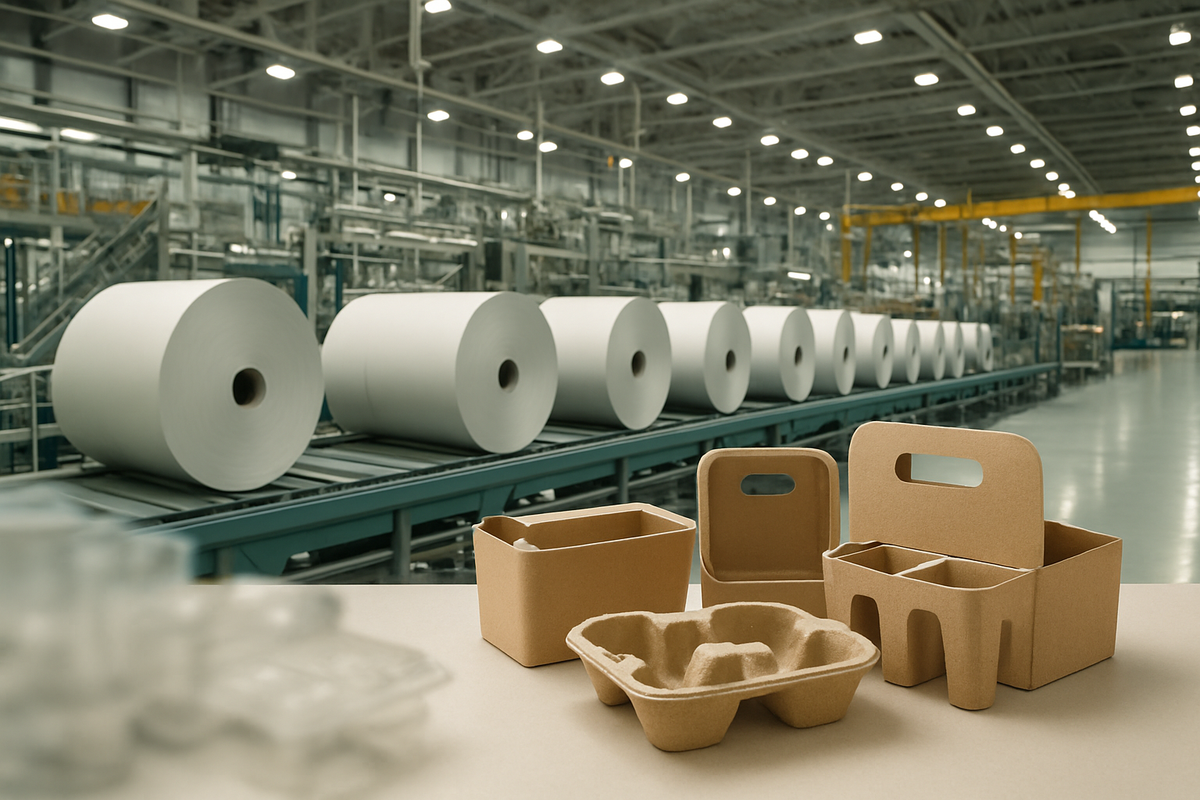
In the competitive landscape of fiber-based packaging, Graphic Packaging is locked in a high-stakes rivalry with newly formed Smurfit WestRock (NYSE: SW) and the legacy powerhouse International Paper (NYSE: IP). While Smurfit WestRock has focused on global scale following its 2024 merger, Graphic Packaging has doubled down on being the lowest-cost producer of Coated Recycled Board (CRB) in North America. This strategy is centered on the Waco, Texas mill, which produced its first commercially saleable rolls in October 2025. This facility is expected to be a major "winner" for the company, contributing an estimated $80 million in incremental EBITDA in 2026 by allowing the closure of older, inefficient mills.
Conversely, the "losers" in this scenario are the traditional plastic packaging providers and higher-cost paper mills that cannot compete with the scale and efficiency of the Waco site. Competitors like Amcor (NYSE: AMCR), which primarily operates in the flexible plastic space, are increasingly finding themselves on the defensive as Graphic Packaging successfully converts approximately one billion plastic packages annually into paperboard alternatives. However, International Paper remains a formidable threat, as it has recently pivoted its own strategy toward corrugated packaging, which has shown slightly more resilience than the folding cartons that comprise the bulk of GPK’s portfolio.
The Global Shift to Fiber-Based Solutions
The wider significance of Graphic Packaging’s current position lies in the accelerating global trend of plastic-to-paper substitution. This is not merely a corporate preference but a regulatory necessity, as "Vision 2030" goals and increasingly stringent environmental policies in both the U.S. and Europe force consumer packaged goods (CPG) companies to rethink their supply chains. GPK’s ability to innovate in beverage carriers and foodservice packaging represents a structural shift in the industry, mirroring historical precedents where technological leaps—such as the move from glass to aluminum—redefined market leadership for decades.
Furthermore, the ripple effects of GPK’s Waco facility will likely force a broader industry consolidation. As Graphic Packaging drives down the marginal cost of recycled paperboard, smaller players with less capital to invest in modern machinery may find themselves squeezed out of the market. This mirrors the "efficiency-led" shakeouts seen in the steel and automotive industries in previous cycles, where the companies that survived the heavy-investment phase emerged with significant pricing power and higher margins during the subsequent economic upswing.
The Path to 2027: Deleveraging and Growth
Looking ahead, the short-term focus for Graphic Packaging will be its Q4 2025 earnings call, scheduled for February 3, 2026. This event will be the first major test for CEO Robbert Rietbroek, who must convince analysts that the "Waco effect" is real and that the company can hit its ambitious target of $700 million to $800 million in free cash flow for the 2026 fiscal year. A successful ramp-up in Waco, combined with near-zero federal cash taxes due to capital investment credits, could provide the liquidity needed to aggressively pay down debt and potentially reinstate share buybacks by late 2026.
In the long term, the primary challenge remains the consumer. If grocery volumes remain stagnant, GPK will have to rely entirely on market share gains from plastic conversion to drive growth. However, if consumer confidence rebounds and the "inventory destocking" phase of 2025 concludes, the company could see a "double-whammy" of positive catalysts: rising volumes and falling unit costs. This scenario would likely lead to a significant re-rating of the stock, as the market begins to value GPK as a high-margin sustainability leader rather than a debt-laden industrial cyclical.
Summary: A High-Conviction "Big Picture" Play
Graphic Packaging’s current share price reflects the pain of a multi-year transition and a difficult macroeconomic environment, but the fundamental investment thesis remains intact. The company has successfully built the most efficient recycled paperboard infrastructure in the world, positioned itself as the primary beneficiary of the plastic-to-paper shift, and installed a new leadership team focused on operational discipline. While the profit headwinds of 2025 were undeniable, they appear to be transitory rather than structural.
Moving forward, investors should watch for two key indicators: the EBITDA contribution from the Waco facility in the first half of 2026 and any signs of a volume recovery in the consumer staples sector. If Graphic Packaging can demonstrate that it has passed the peak of its capital expenditure cycle and is entering a phase of sustained cash generation, the "big picture" upside could be substantial. For those with a long-term horizon, the current dip may eventually be viewed as a rare entry point into a company that is fundamentally reshaping the future of global packaging.
This content is intended for informational purposes only and is not financial advice.