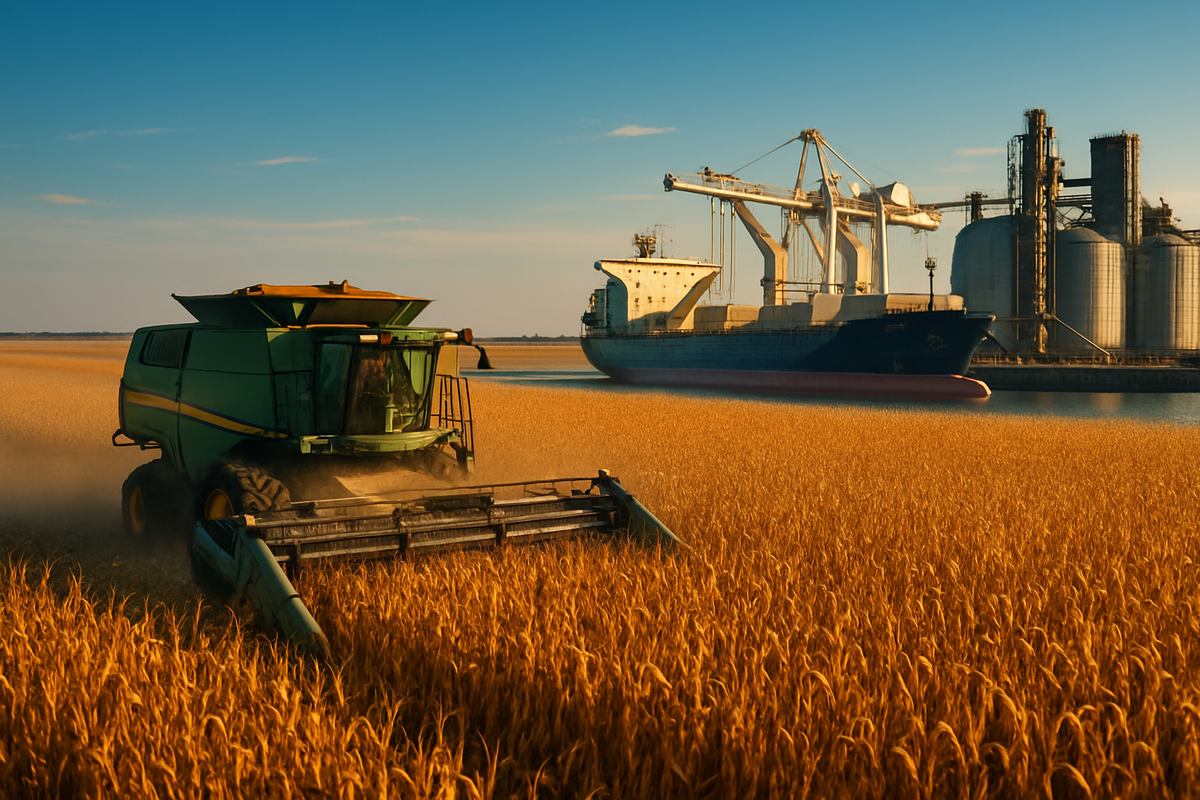
The United States agricultural sector is witnessing a historic resurgence in international demand, with corn export volumes skyrocketing by 33% over the past year. Driven by a record-breaking 17.02 billion bushel harvest in late 2025, American growers are successfully reclaiming global market share, navigating a complex landscape of shifting trade alliances and fluctuating commodity prices. As of February 5, 2026, the surge is providing a vital buffer for the domestic market, which has faced downward price pressure from an unprecedented supply glut.
While the sheer scale of the 2025 harvest initially sparked fears of a domestic surplus that could crash prices, the aggressive pace of exports has stabilized the floor for corn futures. This revitalized demand, primarily anchored by massive purchase commitments from Mexico and Japan, underscores the enduring reliance of the global livestock and industrial sectors on the U.S. supply chain. Beyond exports, the market is finding additional support from a robust domestic ethanol industry and high-volume feed usage, even as the global trade map is redrawn.
Record Volumes and Strategic Alliances: The 2025-2026 Export Boom
The current spike in export activity is the result of a "perfect storm" of high domestic productivity and favorable international market conditions. Following the completion of the 2025 harvest—which saw record yields of 186.5 bushels per acre—U.S. corn became the most price-competitive option on the global stage. By early February 2026, export inspections were consistently outpacing previous years, with cumulative commitments for the 2025/2026 marketing year reaching levels not seen in over a decade.
Mexico has solidified its position as the premier destination for American corn, with commitments exceeding 15.9 million metric tons as of late 2025. Despite ongoing diplomatic discussions regarding biotechnology under the USMCA, the Mexican livestock and poultry sectors have remained aggressive buyers, prioritizing the proximity and reliability of U.S. rail and vessel shipments. Simultaneously, Japan has maintained its status as a critical, high-volume partner, utilizing U.S. grain to sustain its domestic food security and animal feed requirements.
The timeline leading to this moment was defined by a strategic shift in the latter half of 2025. As Brazil’s "safrinha" (second-crop) exports slowed due to seasonal and logistical bottlenecks, the U.S. moved to fill the void. Market players, including major grain elevators and port operators, reported a "blistering pace" of activity at Gulf Coast and Pacific Northwest terminals. This surge was further supported by a weakening of the U.S. dollar in late 2025, which made American grain even more attractive to price-sensitive buyers in South Korea and Colombia.
Winners and Losers: Agribusiness Giants Capitalize on Volume
The primary beneficiaries of this export boom are the large-scale "ABCD" grain traders and logistics firms that manage the flow of commodities from the Midwest to the global market. Archer-Daniels-Midland (NYSE: ADM) has been a standout performer, reporting in its most recent earnings call that high-volume corn handling and strong ethanol margins are offsetting weakness in other segments. ADM’s expansive network of processing plants and export terminals has allowed it to capture significant margins even as farmgate prices remain relatively low.
Similarly, Bunge Global SA (NYSE: BG) has leveraged its global logistics footprint to facilitate the surge in shipments. Bunge’s ability to manage the "basis"—the price difference between local cash markets and futures—has proven highly profitable during this period of high turnover. However, the company faces the challenge of managing infrastructure capacity as the sheer volume of grain threatens to clog rail lines and river transport systems.
On the industrial side, Green Plains Inc. (NASDAQ: GPRE) is emerging as a winner due to the abundance of cheap feedstock. As one of the leading ethanol producers, Green Plains is benefiting from a stable supply of corn and strong legislative support for higher ethanol blends like E15. Conversely, the "losers" in this scenario may be the individual farmers who, despite record production, are facing slim profit margins as the massive supply keeps prices near $4.10 per bushel. While companies like Deere & Company (NYSE: DE) and Corteva (NYSE: CTVA) continue to see demand for high-yield technologies, the lower net farm income may temper equipment sales in the coming fiscal year.
Reorganizing Global Trade: A New Era of Grain Diplomacy
The 33% increase in exports occurs against the backdrop of a broader reorganization of global trade relationships. For years, the U.S. corn market was heavily influenced by the purchasing whims of China. However, in 2025 and early 2026, the market has seen a "diversification away from single-buyer dependency." While China remains a factor, the pivot toward Mexico, Japan, and Southeast Asian markets has created a more resilient and predictable demand profile for American exporters.
This shift is partly a response to geopolitical tensions and the strategic desire of many nations to diversify their food sources. The U.S. has capitalized on this by emphasizing the reliability of its infrastructure and the transparency of its grading systems. Furthermore, the domestic ethanol sector's role is evolving. The push for Sustainable Aviation Fuel (SAF) is beginning to transform ethanol from a simple fuel additive into a high-tech feedstock, potentially creating a "third pillar" of corn demand alongside feed and exports.
Historically, periods of record production often led to prolonged price depressions. However, the current environment differs due to the sheer efficiency of the modern supply chain. The ability to move billions of bushels of grain across oceans in a matter of weeks has allowed the U.S. to act as the world's "overflow tank," absorbing global demand shocks and maintaining its status as the world’s most efficient agricultural producer.
The Road Ahead: Ethanol, SAF, and Market Sustainability
Looking toward the remainder of 2026, the market will likely focus on whether this export pace can be sustained. A critical factor will be the upcoming 2026 planting season. If farmers respond to current low prices by shifting acreage away from corn and into soybeans or other crops, the current supply glut could tighten by late 2026, potentially driving prices higher.
In the short term, the expansion of the SAF market represents the most significant "wildcard" for corn demand. If federal tax credits and environmental mandates continue to favor corn-based ethanol as a precursor for jet fuel, the industrial demand could eventually rival the export market in size. Companies like Green Plains Inc. (NASDAQ: GPRE) are already positioning themselves to be leaders in this space, investing in high-protein feed co-products and carbon capture technologies to lower the carbon intensity of their fuel.
Strategic adaptations will also be required from logistics providers. The record volumes of 2025/2026 have pushed the U.S. rail and barge system to its limits. Continued investment in port infrastructure and inland waterway maintenance will be essential to ensure that the U.S. can remain the "supplier of choice" when global demand spikes.
Conclusion: A Market in Transition
The record-breaking performance of U.S. corn exports is more than just a statistical anomaly; it is a testament to the resilience of the American agricultural engine. With a 33% increase in volume driven by stalwart partners like Mexico and Japan, the industry has successfully navigated a period of record supply without a total collapse in market stability. The strength of the ethanol sector and the emerging SAF market provide further evidence that corn remains a cornerstone of both the global food and energy systems.
For investors, the coming months will require a close watch on two primary indicators: the USDA’s planting intentions reports and the pace of the Brazilian harvest. While the "middlemen" like Archer-Daniels-Midland (NYSE: ADM) and Bunge Global SA (NYSE: BG) are currently in a sweet spot of high-volume turnover, the long-term health of the market depends on a sustainable balance between record-breaking yields and diversified global demand. As the world’s trade maps continue to be redrawn, the U.S. corn sector has proven that it is capable of not only growing the crop but also finding a home for every last bushel.
This content is intended for informational purposes only and is not financial advice.