
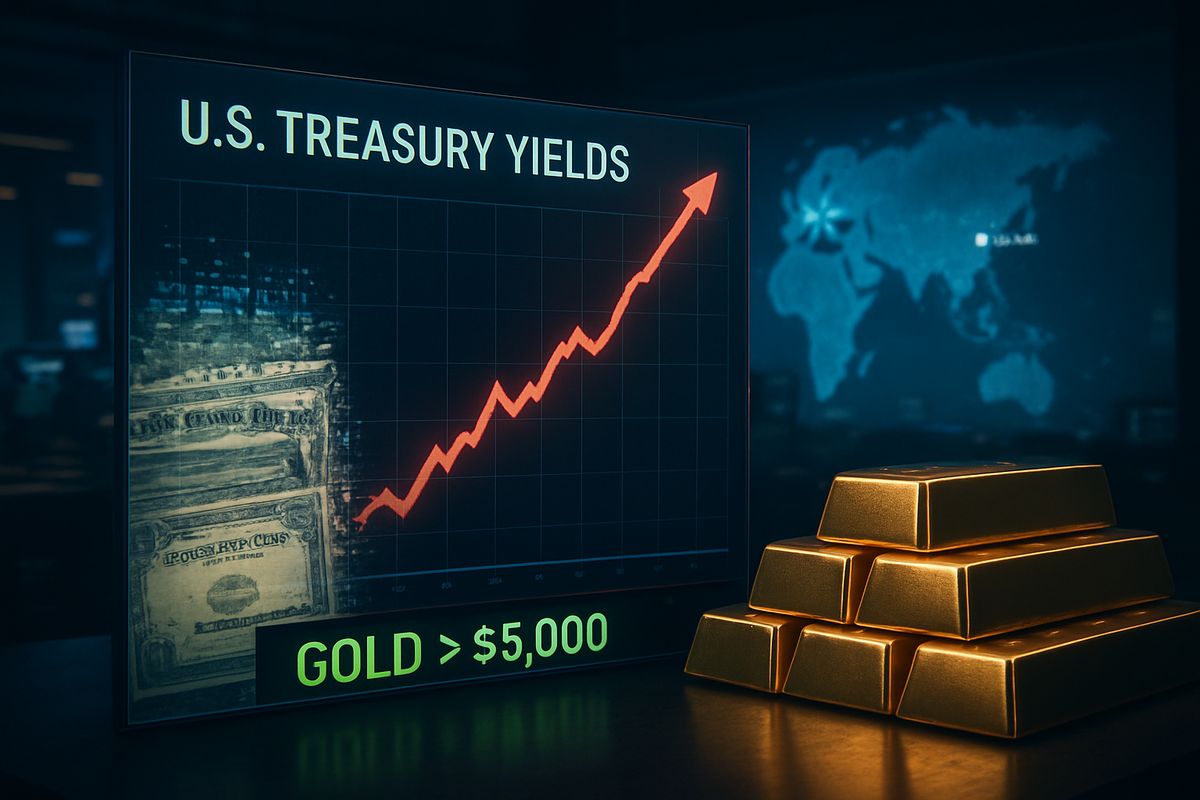
As of March 5, 2026, the global financial landscape is grappling with a tectonic shift in capital flows as China’s major financial institutions continue a systematic retreat from the U.S. Treasury market. Recent data confirms that China’s holdings of American sovereign debt have plummeted to levels not seen since the 2008 financial crisis, signaling a definitive end to the era of "Chimerica" interdependence. This aggressive divestment strategy, coordinated through both the central bank and state-owned commercial lenders, has injected fresh volatility into bond markets and forced a reassessment of the U.S. dollar’s long-term dominance.
The immediate implications of this sell-off are being felt across the yield curve. With one of the world’s largest creditors stepping back, the 10-year Treasury yield has recently spiked toward 4.25%, creating a "bear steepening" effect that has rattled equity markets and increased borrowing costs for American consumers. As the U.S. faces a burgeoning national debt of over $38.6 trillion, the absence of a reliable "buyer of last resort" in Beijing is raising uncomfortable questions about the future stability of the Western financial system.
A Stealth Retreat Becomes an Explicit Strategy
The current exodus from U.S. debt is not a sudden panic but the culmination of a multi-year "stealth" reduction that turned into an explicit policy directive in early 2026. On February 9, 2026, reports surfaced that the People’s Bank of China (PBOC) and the National Financial Regulatory Administration (NFRA) issued "window guidance" to the nation's "Big Four" state-owned banks. These institutions—including Industrial and Commercial Bank of China (OTC: IDCBY), Bank of China (OTC: BACHY), China Construction Bank (OTC: CICHY), and Agricultural Bank of China (OTC: ACGBY)—were reportedly urged to "orderly liquidate" Treasury positions that exceeded new, more stringent internal risk thresholds.
This directive followed a year in which China shed an estimated $115 billion in U.S. Treasuries, bringing its total holdings down to approximately $682.6 billion by late 2025. The timeline of this retreat traces back to the escalating trade and technology restrictions of 2024 and 2025, which convinced Beijing that financial "sanction-proofing" was a national security priority. By reducing its exposure to the dollar, China aims to insulate its economy from the potential "weaponization" of the U.S. financial system, a lesson learned from the freezing of Russian foreign reserves in 2022.
The market reaction has been swift and unforgiving. When the scale of the "Big Four" divestment became clear in mid-February, the 30-year Treasury yield climbed to 4.88%, its highest level in months. This movement was exacerbated by the PBOC’s simultaneous pivot toward physical gold. For 15 consecutive months leading into early 2026, China has been a net buyer of bullion, pushing its gold reserves to a record 2,308 tonnes and helping drive the price of the precious metal above the historic $5,000 per ounce mark.
Navigating the Fallout: Winners and Losers in a Rising Yield Environment
The dramatic shift in Treasury demand has created a polarized environment for public companies. Major U.S. financial institutions are finding themselves on both sides of the ledger. JPMorgan Chase & Co. (NYSE: JPM) has emerged as a tactical winner; the bank’s markets division reported a 17% surge in revenue as volatility in the fixed-income markets drove record trading volumes. Furthermore, the steepening yield curve has allowed JPMorgan to expand its net interest margins (NIM), capitalizing on the gap between what it pays depositors and what it earns on loans.
Conversely, Bank of America Corp (NYSE: BAC) has faced a more complex reality. While the bank benefits from higher lending rates, it continues to manage one of the industry's largest portfolios of long-dated securities. The rapid rise in yields has triggered significant "unrealized losses" on these holdings, echoing the stresses seen during the 2023 regional banking crisis. While the bank remains well-capitalized, the drag on its book value has led to a more cautious outlook from investors compared to its peers.
In the commodities and hedge fund sectors, the "de-dollarization" trade has produced clear beneficiaries. The SPDR Gold Shares (NYSEARCA: GLD) and the VanEck Gold Miners ETF (NYSEARCA: GDX) have seen massive inflows as investors seek alternatives to the fluctuating dollar. Mining giants like Newmont Corp (NYSE: NEM) and Barrick Gold Corp (NYSE: GOLD) have seen their valuations soar on the back of record-high gold prices and surging production levels aimed at meeting Asian demand. For these companies, the Chinese shift away from paper debt and toward hard assets represents a fundamental, long-term tailwind.
A Fundamental Shift in Global Macro Trends
The reduction in Chinese Treasury holdings is more than a mere portfolio rebalancing; it is a symptom of a broader fragmentation of the global financial order. This event fits into a wider trend where "Global South" nations are increasingly diversifying their reserves to include gold, local currencies, and even digital assets. Historically, the U.S. Treasury was considered the ultimate "risk-free asset," but the combination of soaring U.S. deficits and geopolitical friction has tarnished that status. Comparisons are already being drawn to the 1970s, another era of high inflation and shifting reserve currencies.
This trend has significant ripple effects on U.S. competitors and partners. Nations like Japan and various Eurozone members are now under pressure to absorb the supply of debt that China is vacating, often requiring higher yields to do so. This "crowding out" effect could eventually lead to higher capital costs for private corporations globally. Furthermore, the regulatory environment is shifting; the U.S. Treasury Department may be forced to introduce new incentives or "yield curve control" measures if the lack of foreign demand begins to threaten the government’s ability to fund its operations.
The policy implications for Washington are stark. As the 2026 debt ceiling negotiations approach, the "China factor" has become a central point of debate in Congress. Proponents of fiscal restraint argue that the Chinese sell-off is a "canary in the coal mine" for American overspending. Meanwhile, geostrategists suggest that the U.S. must accelerate its own domestic industrial policies to counter the loss of Chinese capital, potentially leading to more protectionist trade measures that could further isolate the two largest economies.
What Lies Ahead: Strategic Pivots and Market Scenarios
In the short term, market participants should prepare for continued "yield shocks." If other major holders, such as Japan or oil-exporting nations, follow China’s lead, the Federal Reserve may be forced into a strategic pivot. We could see a return to quantitative easing (QE) not to stimulate the economy, but simply to function as the "buyer of last resort" for government debt—a move that would risk reigniting inflationary pressures just as they seemed to be cooling in early 2026.
Long-term, we are likely to see a "bifurcated" financial system. One side will remain anchored in the dollar and Western clearing systems, while the other, led by China and the BRICS+ bloc, moves toward a gold-backed or multi-currency framework. For public companies, this means navigating a world of higher hedging costs and more complex supply chains. Investors may need to structurally increase their exposure to real assets and "hard" commodities as the reliable "60/40" portfolio (60% stocks, 40% bonds) faces its greatest challenge in decades due to the instability of the bond component.
Closing Thoughts for the Modern Investor
The current flight of Chinese capital from the U.S. Treasury market marks a historic turning point. Key takeaways include the undeniable rise of gold as a primary reserve asset and the structural pressure on U.S. interest rates. While the U.S. dollar is unlikely to be replaced overnight, its role as the undisputed anchor of global finance is clearly diminishing. The market moving forward will be defined by "fiscal dominance," where government debt levels and the identity of the buyers dictate the direction of all other asset classes.
For investors, the coming months will require a high degree of vigilance. Watch for the monthly TIC (Treasury International Capital) data releases and the PBOC's gold reserve announcements as primary indicators of this trend. Additionally, pay close attention to the earnings calls of major money-center banks like JPMorgan Chase and Bank of America for clues on how the industry is adapting to a permanent higher-yield environment. In this new era, the safety of "government-backed" debt may no longer be a given, and diversification must look beyond traditional borders.
This content is intended for informational purposes only and is not financial advice.