
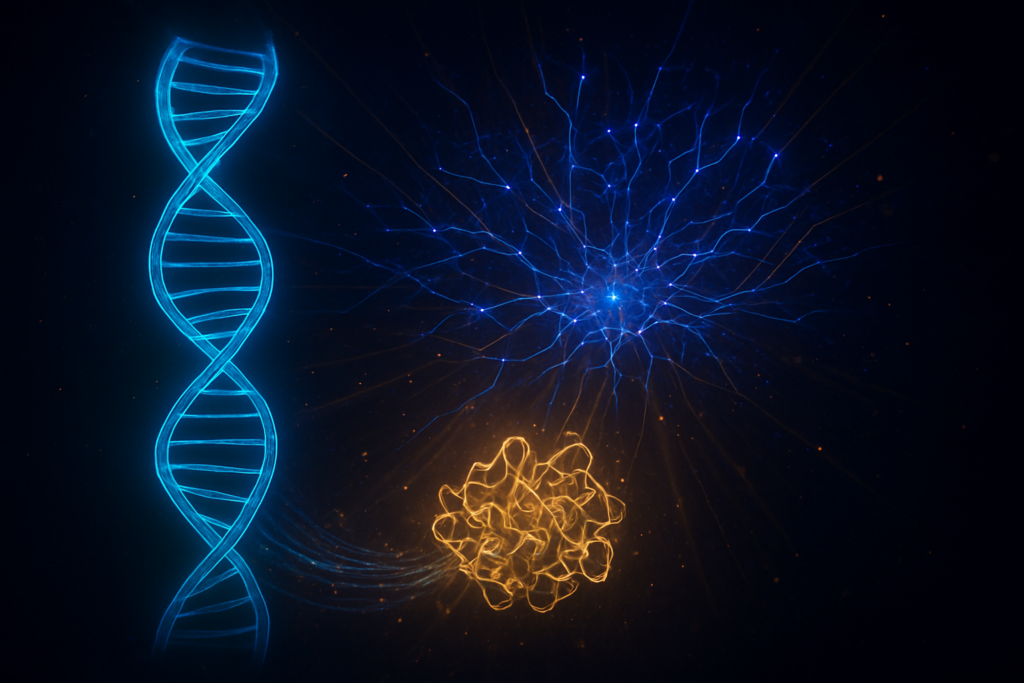
The announcement of the 2024 Nobel Prizes in Physics and Chemistry sent a shockwave through the global scientific community, signaling a definitive end to the "AI Winter" and the beginning of what historians are already calling the "Silicon Enlightenment." By honoring the architects of artificial neural networks and the pioneers of AI-driven molecular biology, the Royal Swedish Academy of Sciences did more than just recognize individual achievement; it officially validated artificial intelligence as the most potent instrument for discovery in human history. This double-header of Nobel recognition has transformed AI from a controversial niche of computer science into the foundational infrastructure of modern physical and life sciences.
The immediate significance of these awards cannot be overstated. For decades, the development of neural networks was often viewed by traditionalists as "mere engineering" or "statistical alchemy." The 2024 prizes effectively dismantled these perceptions. In the year and a half since the announcements, the "Nobel Halo" has accelerated a massive redirection of capital and talent, moving the focus of the tech industry from consumer-facing chatbots to "AI for Science" (AI4Science). This pivot is reshaping everything from how we develop life-saving drugs to how we engineer the materials for a carbon-neutral future, marking a historic validation for a field that was once fighting for academic legitimacy.
From Statistical Physics to Neural Architectures: The Foundational Breakthroughs
The 2024 Nobel Prize in Physics was awarded to John Hopfield and Geoffrey Hinton for their "foundational discoveries and inventions that enable machine learning with artificial neural networks." This choice highlighted the deep, often overlooked roots of AI in the principles of statistical physics. John Hopfield’s 1982 development of the Hopfield Network utilized the behavior of atomic spins in magnetic materials to create a form of "associative memory," where a system could reconstruct a complete pattern from a fragment. This was followed by Geoffrey Hinton’s Boltzmann Machine, which applied statistical mechanics to recognize and generate patterns, effectively teaching machines to "learn" autonomously.
Technically, these advancements represent a departure from the "expert systems" of the 1970s, which relied on rigid, hand-coded rules. Instead, the models developed by Hopfield and Hinton allowed systems to reach a "lowest energy state" to find solutions—a concept borrowed directly from thermodynamics. Hinton’s subsequent work on the Backpropagation algorithm provided the mathematical engine that drives today’s Deep Learning, enabling multi-layered neural networks to extract complex features from vast datasets. This shift from "instruction-based" to "learning-based" computing is what made the current AI explosion possible.
The reaction from the scientific community was a mix of awe and introspection. While some traditional physicists questioned whether AI truly fell under the umbrella of their discipline, others argued that the mathematics of entropy and energy landscapes are the very heart of physics. Hinton himself, who notably resigned from Alphabet Inc. (NASDAQ: GOOGL) in 2023 to speak freely about the risks of the technology he helped create, used his Nobel platform to voice "existential regret." He warned that while AI provides incredible benefits, the field must confront the possibility of these systems eventually outsmarting their creators.
The Chemistry of Computation: AlphaFold and the End of the Folding Problem
The 2024 Nobel Prize in Chemistry was awarded to David Baker, Demis Hassabis, and John Jumper for a feat that had eluded biologists for half a century: predicting the three-dimensional structure of proteins. Demis Hassabis and John Jumper, leaders at Google DeepMind, a subsidiary of Alphabet Inc., developed AlphaFold2, an AI system that solved the "protein folding problem." By early 2026, AlphaFold has predicted the structures of nearly all 200 million proteins known to science—a task that would have taken hundreds of millions of years using traditional experimental methods like X-ray crystallography.
David Baker’s contribution complemented this by moving from prediction to creation. Using his software Rosetta and AI-driven de novo protein design, Baker demonstrated the ability to engineer entirely new proteins that do not exist in nature. These "spectacular proteins" are currently being used to design new enzymes, sensors, and even components for nano-scale machines. This development has effectively turned biology into a programmable medium, allowing scientists to "code" physical matter with the same precision we once reserved for software.
This technical milestone has triggered a competitive arms race among tech giants. Nvidia Corporation (NASDAQ: NVDA) has positioned its BioNeMo platform as the "operating system for AI biology," providing the specialized hardware and models needed for other firms to replicate DeepMind’s success. Meanwhile, Microsoft Corporation (NASDAQ: MSFT) has pivoted its AI research toward "The Fifth Paradigm" of science, focusing on materials and climate discovery through its MatterGen model. The Nobel recognition of AlphaFold has forced every major AI lab to prove its worth not just in generating text, but in solving "hard science" problems that have tangible physical outcomes.
A Paradigm Shift in the Global AI Landscape
The broader significance of the 2024 Nobel Prizes lies in their timing during the transition from "General AI" to "Specialized Physical AI." Prior milestones, such as the victory of AlphaGo or the release of ChatGPT, focused on games and human language. The Nobels, however, rewarded AI's ability to interface with the laws of nature. This has led to a surge in "AI-native" biotech and material science startups. For instance, Isomorphic Labs, another Alphabet subsidiary, recently secured over $2.9 billion in deals with pharmaceutical leaders like Eli Lilly and Company (NYSE: LLY) and Novartis AG (NYSE: NVS), leveraging Nobel-winning architectures to find new drug candidates.
However, the rapid "AI-fication" of science is not without concerns. The "black box" nature of many deep learning models remains a hurdle for scientific reproducibility. While a model like AlphaFold 3 (released in late 2024) can predict how a drug molecule interacts with a protein, it cannot always explain why it works. This has led to a push for "AI for Science 2.0," where models are being redesigned to incorporate known physical laws (Physics-Informed Neural Networks) to ensure that their discoveries are grounded in reality rather than statistical hallucinations.
Furthermore, the concentration of these breakthroughs within a few "Big Tech" labs—most notably Google DeepMind—has raised questions about the democratization of science. If the most powerful tools for discovering new materials or medicines are proprietary and require billion-dollar compute clusters, the gap between "science-rich" and "science-poor" nations could widen significantly. The 2024 Nobels marked the moment when the "ivory tower" of academia officially merged with the data centers of Silicon Valley.
The Horizon: Self-Driving Labs and Personalized Medicine
Looking toward the remainder of 2026 and beyond, the trajectory set by the 2024 Nobel winners points toward "Self-Driving Labs" (SDLs). These are autonomous research facilities where AI models like AlphaFold and MatterGen design experiments that are then executed by robotic platforms without human intervention. The results are fed back into the AI, creating a "closed-loop" discovery cycle. Experts predict that this will reduce the time to discover new materials—such as high-efficiency solid-state batteries for EVs—from decades to months.
In the realm of medicine, we are seeing the rise of "Programmable Biology." Building on David Baker’s Nobel-winning work, startups like EvolutionaryScale are using generative models to simulate millions of years of evolution in weeks to create custom antibodies. The goal for the next five years is personalized medicine at the protein level: designing a unique therapeutic molecule tailored to an individual’s specific genetic mutations. The challenges remain immense, particularly in clinical validation and safety, but the computational barriers that once seemed insurmountable have been cleared.
Conclusion: A Turning Point in Human History
The 2024 Nobel Prizes will be remembered as the moment the scientific establishment admitted that the human mind can no longer keep pace with the complexity of modern data without digital assistance. The recognition of Hopfield, Hinton, Hassabis, Jumper, and Baker was a formal acknowledgement that the scientific method itself is evolving. We have moved from the era of "observe and hypothesize" to an era of "model and generate."
The key takeaway for the industry is that the true value of AI lies not in its ability to mimic human conversation, but in its ability to reveal the hidden patterns of the universe. As we move deeper into 2026, the industry should watch for the first "AI-designed" drugs to enter late-stage clinical trials and the rollout of new battery chemistries that were first "dreamed" by the descendants of the 2024 Nobel-winning models. The silicon laureates have opened a door that can never be closed, and the world on the other side is one where the limitations of human intellect are no longer the limitations of human progress.
This content is intended for informational purposes only and represents analysis of current AI developments.
TokenRing AI delivers enterprise-grade solutions for multi-agent AI workflow orchestration, AI-powered development tools, and seamless remote collaboration platforms.
For more information, visit https://www.tokenring.ai/.